
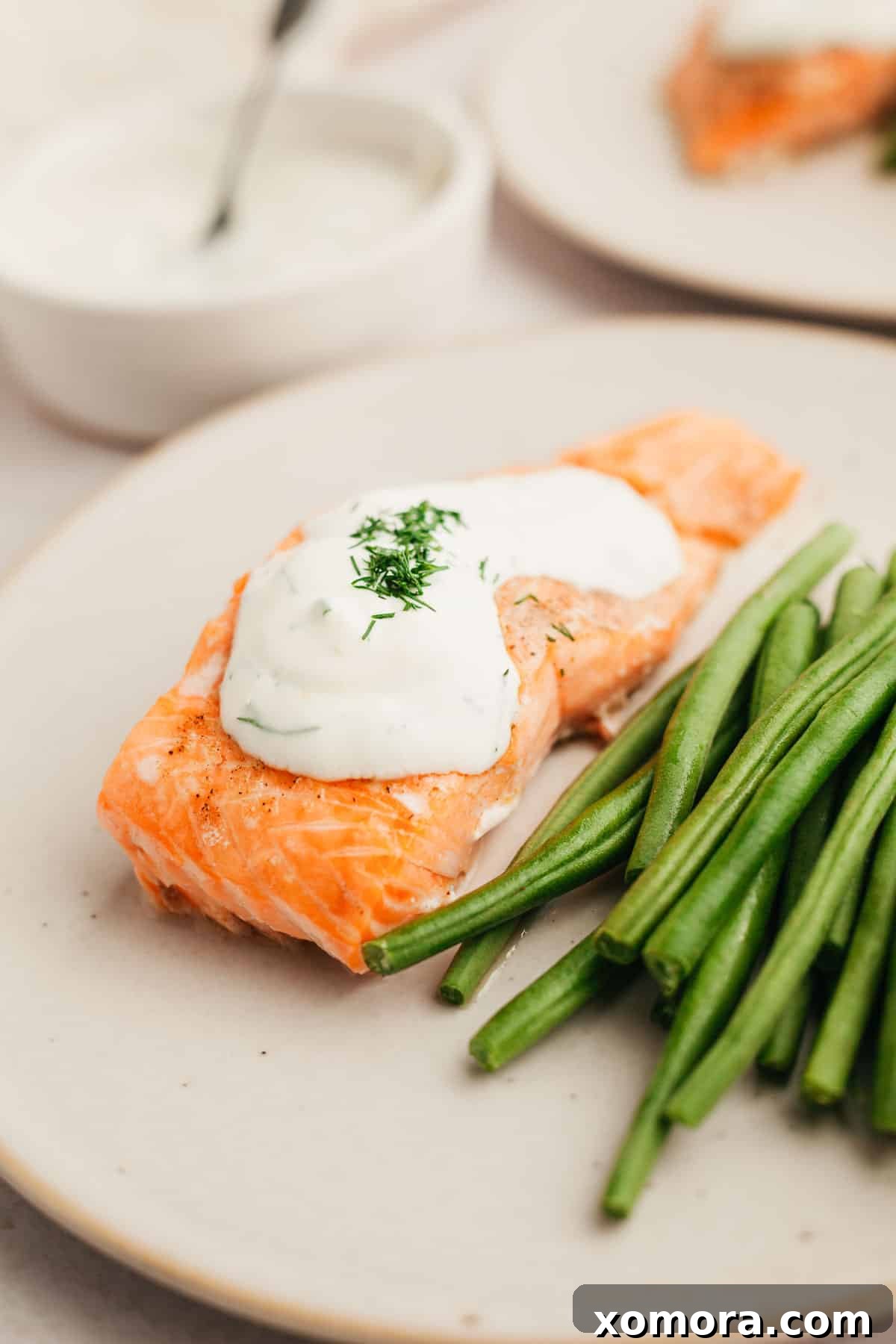
Transform your weeknight dinner routine or impress your guests with this incredibly easy oven-baked salmon, elevated by a luscious, creamy lemon dill sauce. This dish proves that sophisticated flavors don’t require hours in the kitchen, offering a fast, healthy, and undeniably impressive entrée that’s perfect for any occasion. Forget complicated techniques; this recipe is all about maximizing flavor with minimal effort, ensuring a delicious and flaky salmon every single time.
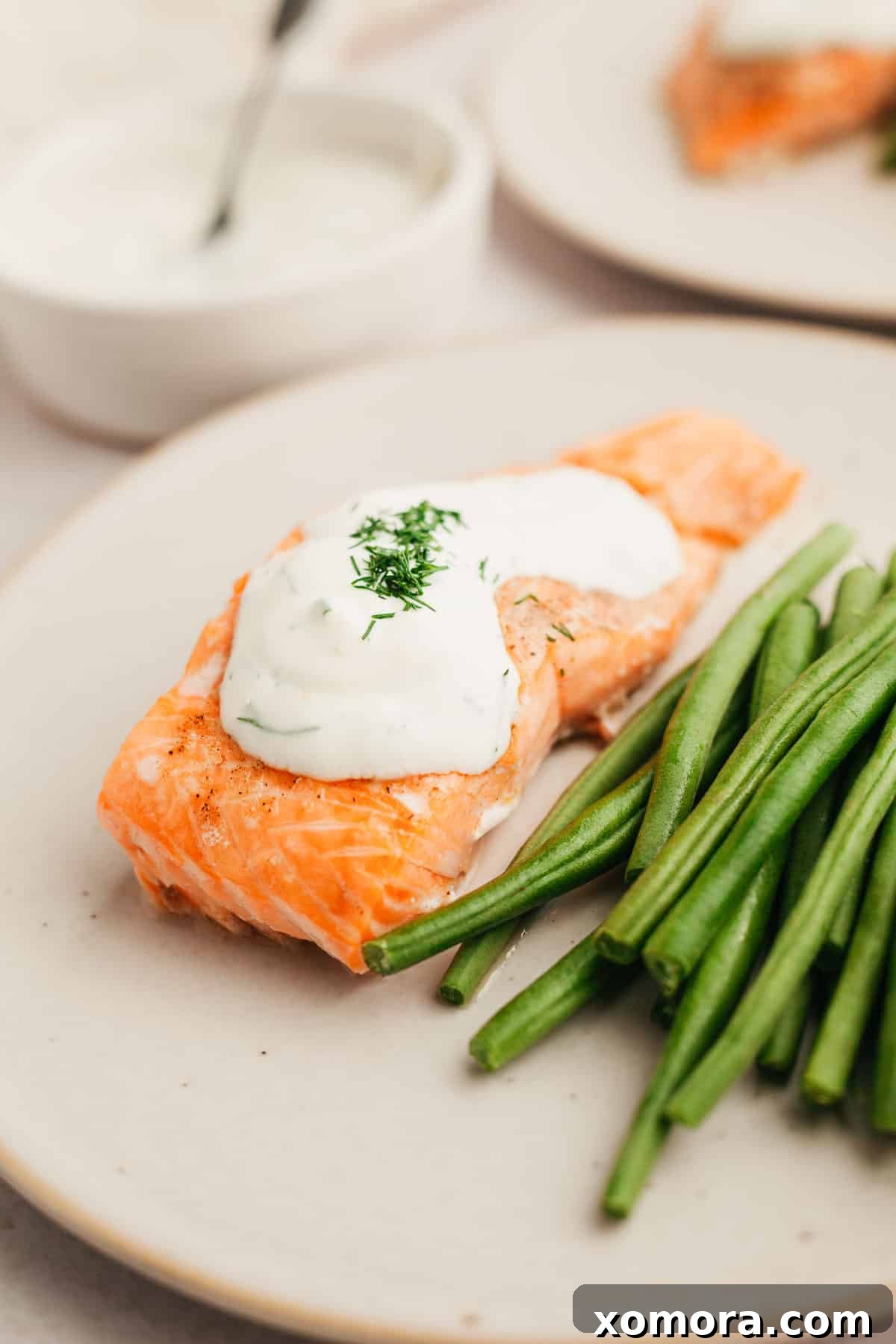
Salmon has long been a favorite in my kitchen, not just for its rich flavor and nutritional benefits, but for its remarkable versatility and ease of preparation. There’s a certain elegance to a perfectly cooked salmon fillet that makes it feel like a special occasion dish, yet it’s surprisingly quick to prepare. Imagine serving a meal so delicious and beautiful that your family or guests will undoubtedly assume you spent hours laboring over it. The secret? It takes less than 30 minutes from start to finish. That’s a culinary triumph we can keep between us!
Why Oven Baked Salmon is Your Weeknight Hero
While I often enjoy the crispy skin achieved from pan-searing salmon, as demonstrated in my Pan-Seared Chipotle Lime Salmon recipe, oven baking truly shines for its hands-off approach. It’s the ultimate method for busy individuals who want to deliver a healthy and flavorful meal without constant supervision. Simply season your salmon, slide it into the oven, and let the magic happen. This “set it and forget it” style of cooking allows the salmon to bake gently until it’s wonderfully opaque and flakes effortlessly with a fork, retaining its natural moisture and delicate texture.
The beauty of baking salmon lies in its consistency and ease of cleanup. No splattering oil, no constant flipping, just a simple baking dish or sheet pan to wash. This method is incredibly forgiving, making it ideal for novice cooks and seasoned chefs alike. Plus, while your oven-baked salmon is cooking, you have ample time to whip up the star accompaniment: a vibrant and creamy lemon dill sauce that perfectly complements the rich flavor of the fish.
The Magic of a Zesty Lemon Dill Sauce
No oven-baked salmon dinner is complete without the perfect sauce, and this lemon dill creation is nothing short of magical. Bright, fresh, and incredibly creamy, it adds a burst of flavor that transforms a simple salmon fillet into a gourmet experience. The tangy lemon cuts through the richness of the salmon, while the fresh dill provides an aromatic, herbaceous counterpoint. It’s a harmonious blend that’s both invigorating and comforting.
Preparing this exquisite sauce couldn’t be simpler. While your salmon is baking to perfection, you’ll effortlessly stir together a few key ingredients, allowing their flavors to meld. When the salmon emerges from the oven, glistening and flaky, a generous dollop of this lemony sauce is all it needs to become an unforgettable meal. The result is a dish that tastes complex and sophisticated but is born from the easiest of preparations.
Essential Ingredients for a Perfect Salmon Dinner
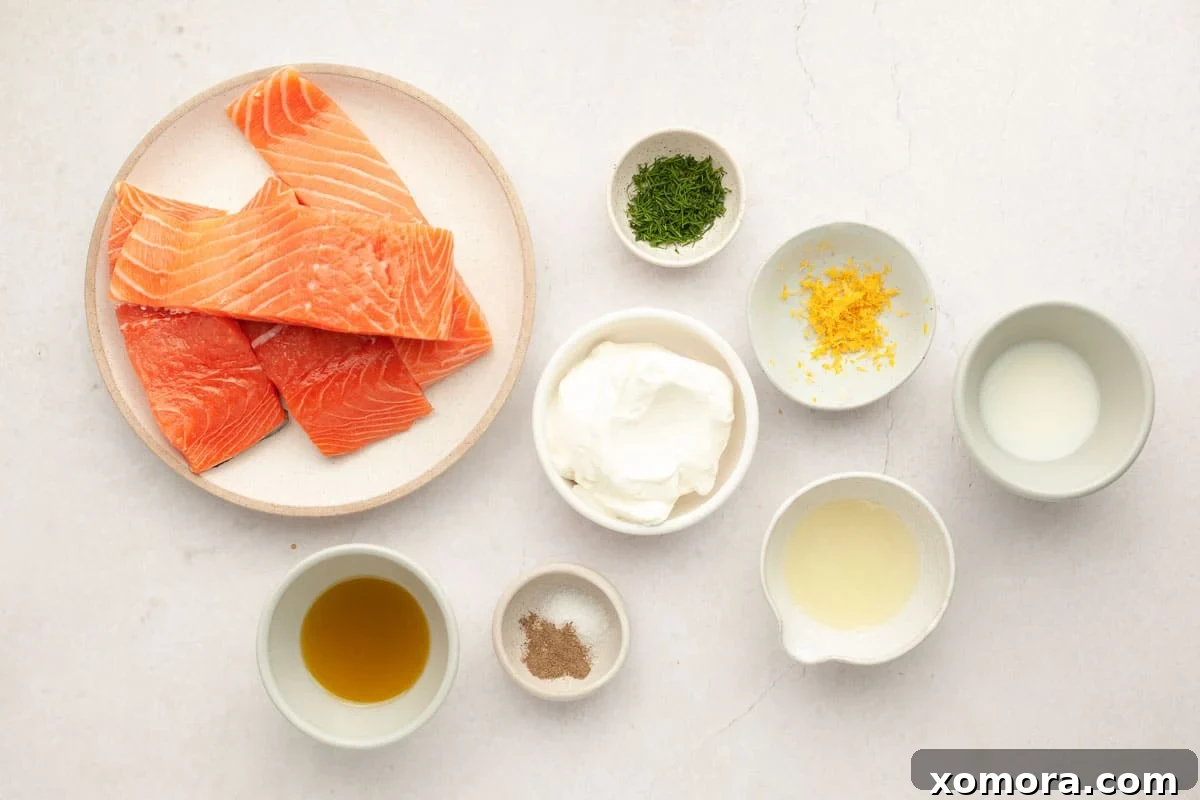
Crafting this delicious oven-baked salmon with lemon dill sauce requires only a handful of readily available ingredients. The key is to choose fresh, high-quality components that will truly shine in the finished dish. Below is a detailed breakdown of what you’ll need, along with tips for selection and substitutions. (For the full list of quantities and detailed instructions, please refer to the recipe card below.)
For the Salmon:
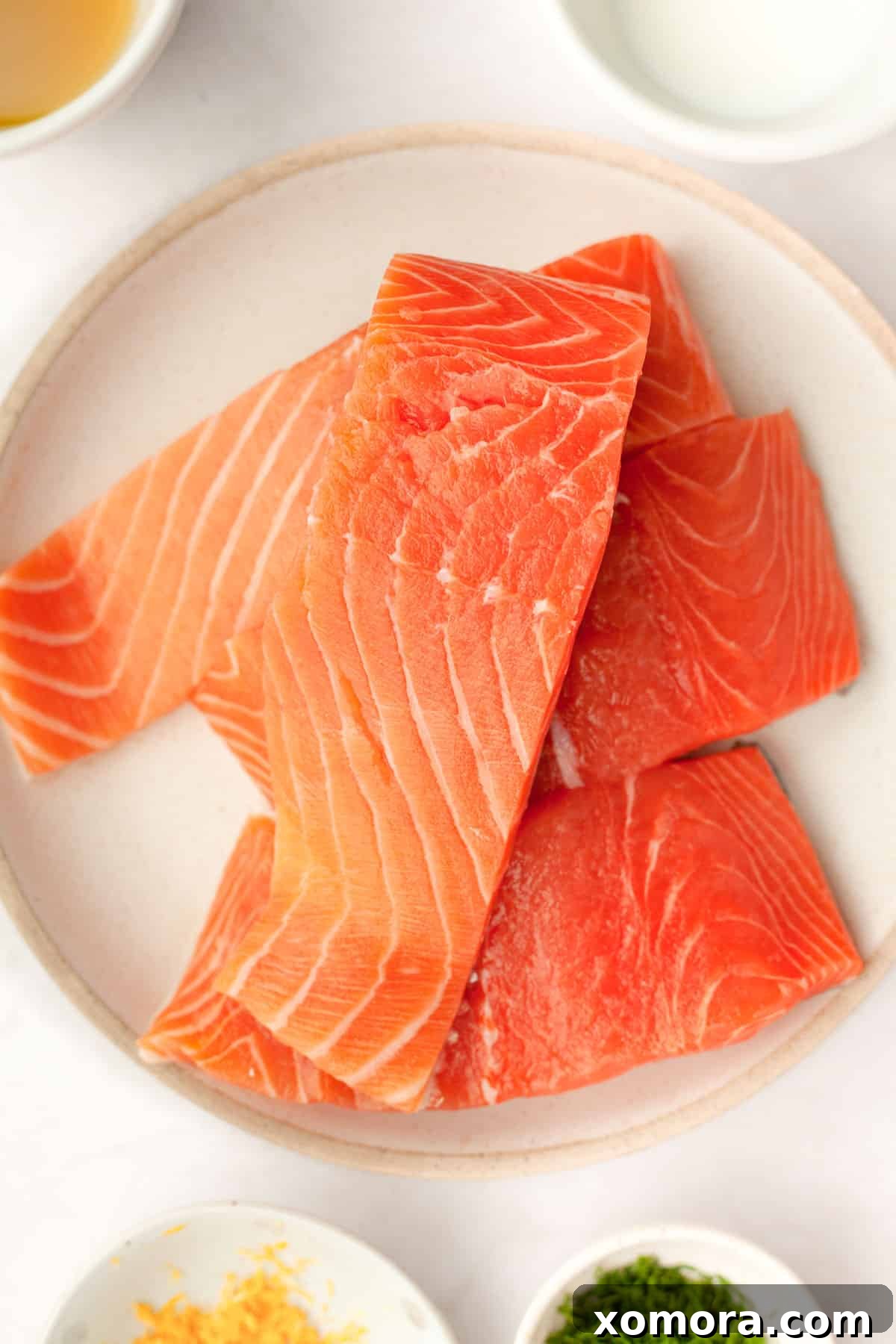
- Salmon Fillets: Whether you opt for fresh or frozen, ensure your fillets are of good quality. If using frozen salmon, always allow them to thaw completely in the refrigerator before cooking to ensure even baking. You can choose fillets with the skin on one side, which often helps retain moisture during cooking, or skinless fillets based on your preference. Look for fillets that are similar in thickness for consistent cooking.
- Olive Oil: Extra virgin olive oil is my preferred choice for its nuanced flavor and health benefits. However, any good quality olive oil will work perfectly to help the seasonings adhere and prevent sticking.
- Seasonings: A simple blend of garlic powder, salt, and freshly ground black pepper is all you need to enhance the salmon’s natural flavor without overpowering it. Garlic powder adds a subtle warmth, while salt and pepper are fundamental flavor enhancers.
For the Creamy Lemon Dill Sauce:
- Plain Greek Yogurt: Non-fat Greek yogurt is my go-to for a lighter sauce, but whole milk or low-fat versions will also yield fantastic results. The crucial detail is to ensure it is plain, unflavored, and unsweetened. The yogurt provides the creamy base and a pleasant tang.
- Mayonnaise: A touch of mayonnaise adds richness and a smooth texture to the sauce. I typically use a light mayonnaise to keep the dish balanced, but feel free to use your favorite variety.
- Lemon Juice: The bright, citrusy backbone of the sauce! Freshly squeezed lemon juice will always offer the most vibrant and prominent flavor, truly making the dill sing. However, high-quality store-bought lemon juice can also be used if fresh lemons aren’t available.
- Fresh Dill: This herb is indispensable for its distinctive, slightly anise-like, fresh flavor. Make sure to chop the dill very finely to ensure it disperses evenly throughout the sauce and infuses every bite with its aromatic essence. Fresh dill is key – dried dill will not provide the same bright, herbaceous quality.
- Lemon Zest: For an extra layer of intense lemon flavor and a beautiful aromatic lift, lemon zest is a must. The zest contains concentrated lemon oils, adding brightness without increasing acidity. Just be sure to zest only the yellow part of the peel, avoiding the bitter white pith.
- Milk of Choice & Water: A tablespoon of milk (any kind: whole, 2%, 1%, skim, almond, or oat) and water helps to achieve the perfect creamy consistency for the sauce, allowing it to coat the salmon beautifully.
- Salt & Garlic Powder: These seasonings tie all the flavors of the sauce together, enhancing the dill and lemon without being overwhelming.
Health Benefits: Why Salmon Deserves a Spot on Your Plate
Beyond its incredible flavor, salmon is celebrated as a powerhouse of nutrition, making it an excellent choice for a healthy diet. It’s particularly renowned for its high content of omega-3 fatty acids, specifically EPA and DHA, which are crucial for optimal brain function, heart health, and reducing inflammation in the joints. Regular consumption of omega-3s has been linked to a reduced risk of chronic diseases, including cardiovascular issues and certain neurological conditions.
Furthermore, salmon, especially wild-caught varieties, is an exceptional source of Vitamin D, a nutrient vital for bone health, immune system support, and even mood regulation. Studies suggest that adequate Vitamin D intake, often found in foods like salmon, may help reduce the risk of various cancers. This lean protein also provides a significant amount of high-quality protein, B vitamins, and essential minerals like selenium and potassium, all contributing to overall well-being. Incorporating oven-baked salmon into your meals is not just a treat for your taste buds but a boost for your entire body.
Salmon: Skin On or Skin Off? Making the Right Choice
When purchasing salmon fillets from your grocery store’s seafood counter, you’ll most commonly find them with the skin on one side. Conversely, frozen, vacuum-sealed salmon often comes skinless. The good news is that both options are perfectly suitable for this recipe, so you can confidently choose whichever is most accessible or aligns with your personal preference.
The skin on salmon serves a practical purpose during cooking: it acts as a natural barrier, helping to lock in moisture and protect the delicate flesh from drying out. This can result in a more succulent and tender fillet. If you prefer to eat your salmon without the skin, it’s remarkably easy to remove after cooking. Once baked, the skin peels away effortlessly, leaving you with perfectly cooked, flaky salmon. So, whether you leave the skin on for cooking benefits or prefer a skinless fillet, your oven-baked salmon will be delicious.
Expert Tips for Selecting the Best Salmon Fillets
Choosing high-quality salmon is paramount to the success of your dish. Here are some expert tips to help you select the freshest and most nutritious fillets available:
- Wild Caught vs. Farmed: If your budget allows and it’s available, always opt for wild-caught salmon. Farmed salmon is often fed a processed, high-fat diet to encourage rapid growth, which can alter its nutritional profile. While farmed salmon may sometimes contain slightly more Omega-3s, it also typically has significantly more Omega-6s (which most modern diets already have in excess), higher calorie counts, more total fat, and more sodium. Crucially, studies have indicated that farmed salmon can contain significantly higher levels of toxins compared to its wild counterpart. Choosing wild-caught supports healthier eating and often more sustainable fishing practices.
- Uniform Thickness: For even cooking, select salmon fillets that are similar in thickness. This ensures all pieces will be perfectly done at the same time, preventing some from drying out while others are still undercooked.
- Vibrant Color: Look for salmon that boasts a bright, rich pink or orange hue. Avoid fillets that appear pale, dull, or have any graying spots, as these can be indicators of age or poor quality. Always check the ingredient list if possible, to ensure no artificial colors or additives have been used to enhance its appearance.
- The “Sniff Test”: Fresh salmon should have a mild, oceanic smell, if any at all. A strong, distinctly “fishy” odor is a tell-tale sign that the salmon is past its prime. Trust your nose!
- Texture: Fresh salmon fillets should be firm and spring back when gently pressed. Avoid any fish that feels mushy or slimy.
- Frozen Salmon Selection: If you’re buying frozen salmon, individual vacuum-sealed portions are your best bet. This packaging minimizes exposure to air, which helps prevent freezer burn and preserves the quality and flavor of the fish. Additionally, individual portions make it easy to thaw and use only what you need, reducing waste.
Storing and Reheating Leftovers for Maximum Flavor
If you happen to have any leftover oven-baked salmon, you’re in luck! It makes for a fantastic meal the next day. To store, allow the salmon to cool completely to room temperature, then transfer it to an airtight container. Refrigerate promptly and consume within 3 days for the best quality and safety.
When it comes to reheating, the key is to do so gently to prevent the salmon from drying out. My preferred method is to reheat it in the oven: preheat your oven to 350 degrees Fahrenheit (175°C). Place the salmon fillets in a baking dish, cover loosely with foil, and bake for about 10-15 minutes, or until just warmed through. This low and slow method helps to retain the salmon’s moisture and flaky texture. Alternatively, you can gently warm it in a skillet over low heat, or even microwave it for a minute or two, though the oven method yields superior results.
Perfect Pairings: What to Serve with Your Salmon
This oven-baked salmon with lemon dill sauce is a versatile main course that pairs beautifully with a wide array of side dishes. The bright, fresh flavors of the salmon and sauce lend themselves well to light and vibrant accompaniments. Here are some fantastic ideas to complete your meal:
- Roasted Vegetables: My Herb Roasted Brussels Sprouts and Broccoli are an ideal match, offering a savory and slightly charred counterpoint. Other excellent choices include Roasted Lemon Asparagus, Easy Roasted Broccoli, or Garlic Green Beans. Roasting brings out the natural sweetness of vegetables, creating a delightful texture contrast.
- Grain-Based Sides: A fluffy bed of quinoa, brown rice, or a light couscous salad would soak up any extra sauce beautifully and add a wholesome element to the meal.
- Potatoes: Simple roasted potatoes, a creamy mashed potato, or even a light potato salad can be a comforting addition.
- Fresh Salads: A crisp green salad with a vinaigrette dressing provides a refreshing balance, especially on warmer evenings. Consider a cucumber and tomato salad for extra freshness.
- Bread: A slice of crusty bread or warm dinner rolls are perfect for soaking up any leftover lemon dill sauce.
For beverage pairings, a crisp white wine like Sauvignon Blanc, Pinot Grigio, or an unoaked Chardonnay would beautifully complement the lemon and dill flavors. If you prefer non-alcoholic options, sparkling water with a lemon wedge or a light iced tea would be equally refreshing.
More recipes like this:
Air Fryer Salmon
Pistachio Herb Crusted Salmon with Asparagus
Pan Seared Chipotle Salmon
Sheet Pan Lemon Herb Salmon and Veggies
Tomato Basil Cod with Broccoli
Easy Oven Baked Salmon with Lemon Dill Sauce
Christina
5 mins
15 mins
20 mins
4 servings
Pin Recipe
Ingredients
Salmon
- 4 6-ounce salmon fillets
- 2 tablespoons olive oil, extra virgin
- salt and pepper, to taste
Lemon Dill Sauce
- ¼ cup plain non-fat Greek yogurt, unflavored and unsweetened
- ¼ cup mayonnaise, light mayo recommended
- 1 tablespoon milk of choice, Whole milk, 2% milk, 1% milk, skim milk, almond milk, and oat milk all work well
- 1 tablespoon lemon juice
- 1 tablespoon water
- 1½ tablespoons fresh dill, finely chopped
- ½ tablespoon lemon zest
- ¼ tablespoon salt
- ¼ teaspoon garlic powder
Instructions
-
If the salmon is particularly cold from refrigeration, allow it to rest at room temperature for 15 to 20 minutes before cooking. This helps ensure more even cooking. Thoroughly blot the salmon fillets dry with paper towels to promote a better sear or crispier skin.
-
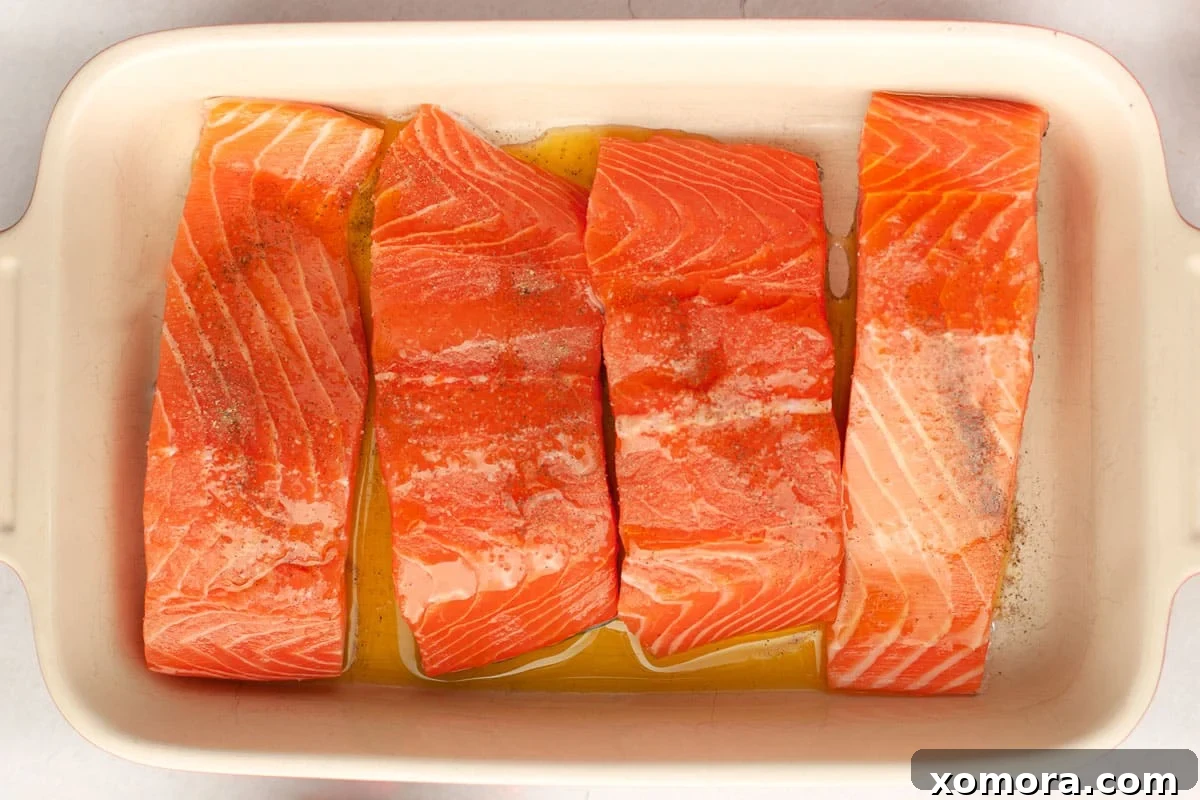
Preheat your oven to 400 degrees Fahrenheit (200°C). Arrange the salmon fillets in a baking dish or on a baking sheet, ideally skin side down if your fillets have skin. Drizzle a generous amount of olive oil over the top of each fillet, then season them generously with salt and pepper to taste, ensuring all surfaces are covered.
-
Bake the salmon for 12 to 15 minutes. Cooking time can vary depending on the thickness of your fillets and your oven’s calibration. The salmon is perfectly cooked when it turns opaque throughout and flakes easily when gently pulled apart with a fork. Avoid overcooking to maintain its tender, moist texture.
-
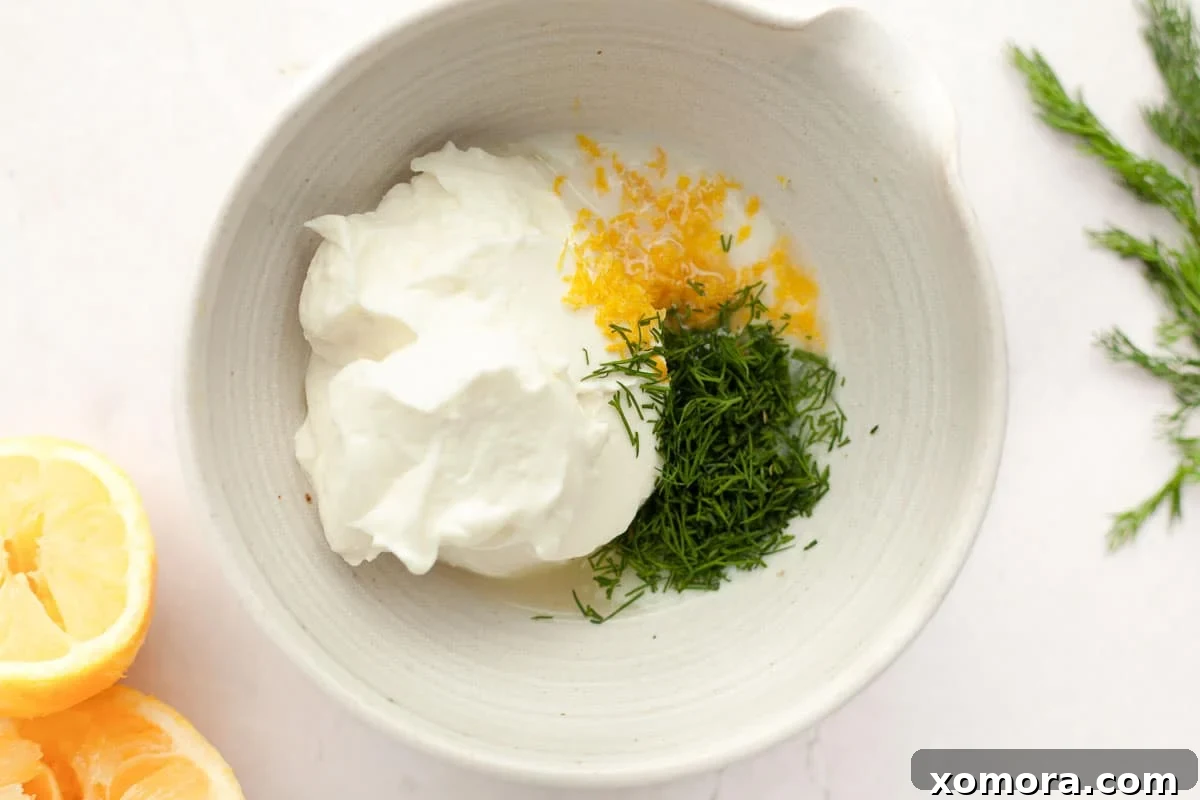
While the salmon is baking, prepare your creamy Lemon Dill Sauce. In a small bowl, combine the plain Greek yogurt, mayonnaise, milk of choice, lemon juice, water, finely chopped fresh dill, lemon zest, salt, and garlic powder. Whisk all the ingredients together thoroughly until the sauce is smooth and well combined.
-
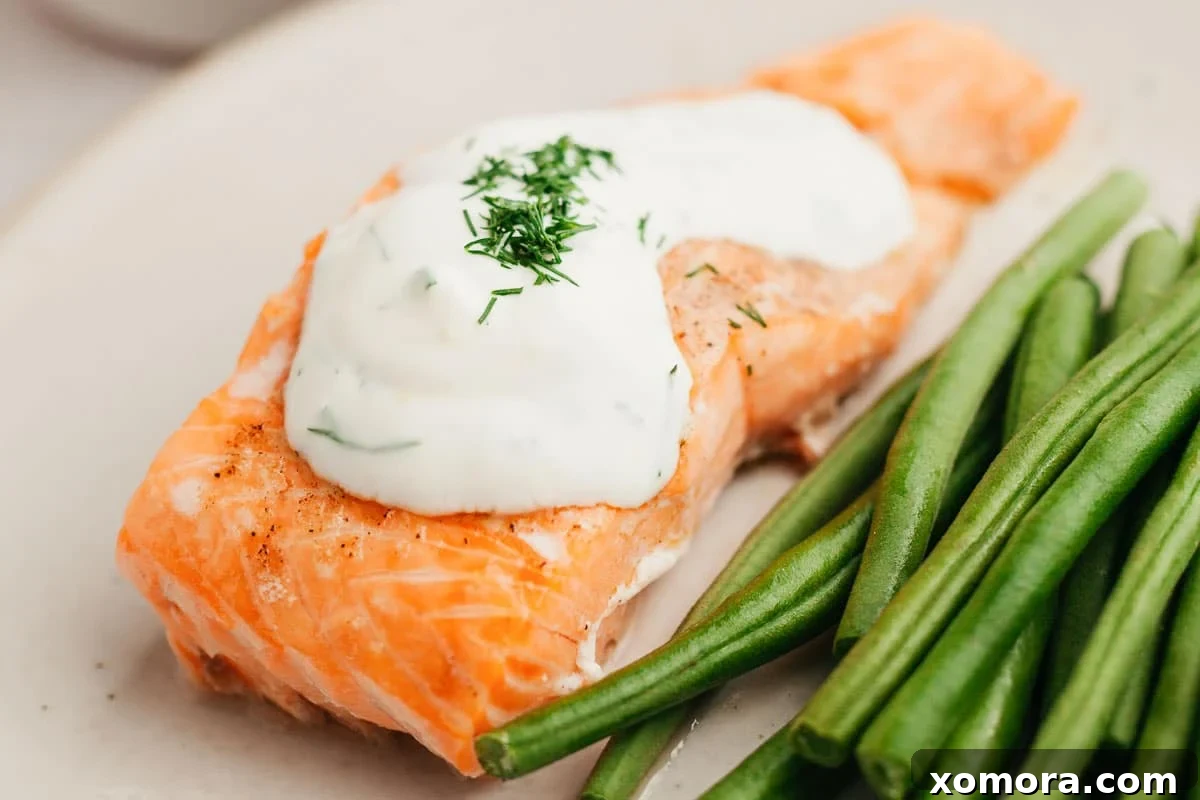
Once the salmon is cooked, transfer it carefully to serving plates. Serve immediately, ideally alongside your favorite green vegetables or other complementary sides. Generously spoon the fresh Lemon Dill Sauce over each fillet. For an added touch of freshness and visual appeal, sprinkle a little extra finely chopped fresh dill or parsley on top before serving.
Notes
Nutrition Facts
Calories: 307kcal,
Carbohydrates: 2g,
Protein: 30g,
Fat: 19g,
Saturated Fat: 3g,
Polyunsaturated Fat: 6g,
Monounsaturated Fat: 9g,
Trans Fat: 0.01g,
Cholesterol: 81mg,
Sodium: 621mg,
Potassium: 731mg,
Fiber: 0.1g,
Sugar: 1g,
Vitamin A: 87IU,
Vitamin C: 3mg,
Calcium: 39mg,
Iron: 1mg
Nutrition information is automatically calculated, so should only be used as an approximation.
Love this recipe? Share your thoughts below!
Your comments and ratings help other home cooks discover delicious meals.
This easy oven-baked salmon with creamy lemon dill sauce is more than just a recipe; it’s a testament to how simple ingredients, combined with a smart cooking method, can create an extraordinary dining experience. Whether you’re feeding your family on a busy weeknight or aiming to impress guests, this dish delivers on flavor, health, and elegance without demanding your precious time. Give it a try, and let this healthy, delicious salmon become a new staple in your culinary repertoire. We can’t wait to hear what you think!