
The Ultimate Guide to Homemade Croutons: Crispy Perfection in Minutes
Prepare to revolutionize your salads and soups with the simple magic of homemade croutons. Forget those hard, flavorless store-bought chunks – this recipe will show you how to create perfectly seasoned, delightfully crunchy, yet tender croutons that are infinitely superior and incredibly easy to make. In just about 15 minutes, you can transform ordinary bread into golden, aromatic bites that will elevate any dish to gourmet status. Get ready to impress!
Why Homemade Croutons Are a Game Changer
While store-bought croutons are convenient, they often fall short in flavor and texture. They tend to be uniformly hard, dry, and lack the vibrant seasoning that truly makes a salad sing. Homemade croutons, however, are a different story entirely. They boast a perfect balance of crispiness and a slight chewiness, bursting with robust flavor from a careful blend of dried herbs, garlic powder, and just the right amount of salt. This isn’t just a minor upgrade; it’s a culinary revelation that will have your guests raving.
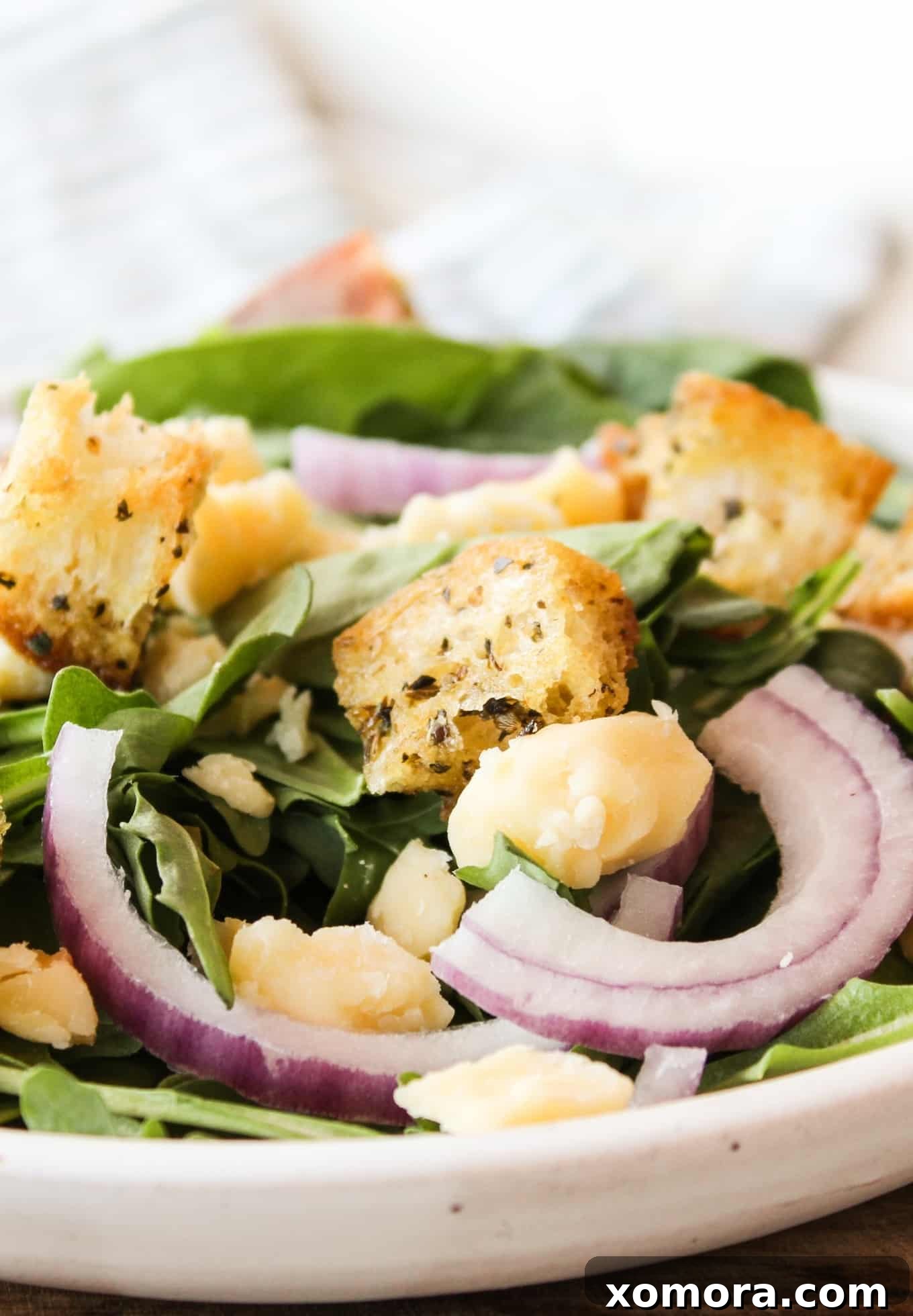
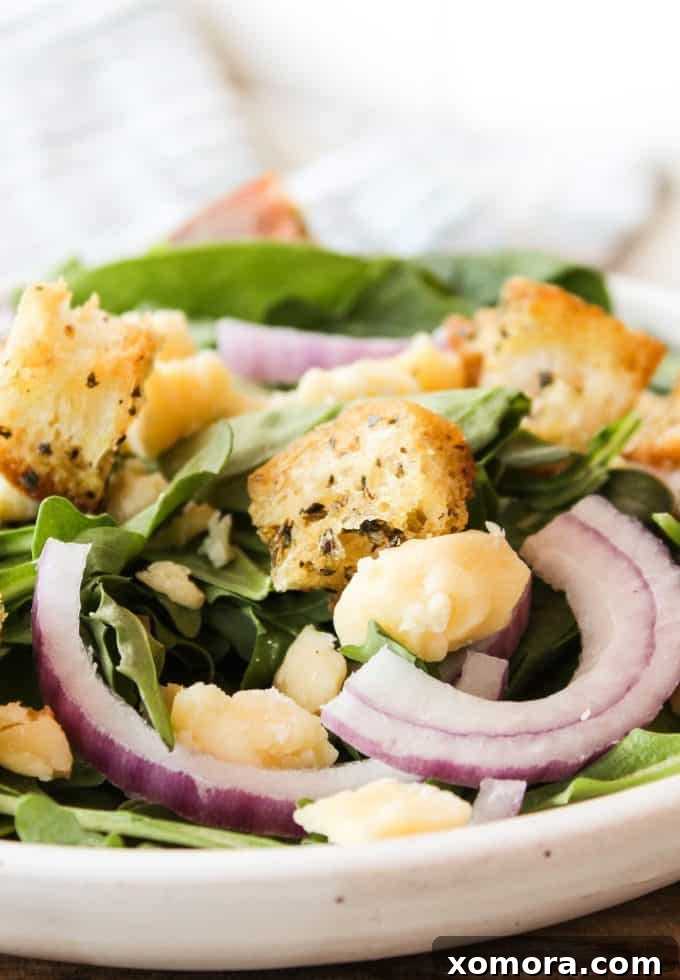
I learned this lesson firsthand at our annual Christmas party one year. I had spent hours meticulously crafting four different lasagnas, a labor of love that I was sure would be the highlight of the evening. Each slice was served alongside a simple Italian side salad, topped with a generous sprinkle of these homemade croutons. To my surprise and slight amusement, my guests spent more time praising the croutons than the elaborate lasagnas! It was a proven fact: these little bread bites are truly that memorable, and they require so little effort compared to the enormous impact they deliver.
Beyond the superior taste and texture, making your own croutons allows for complete control over ingredients, ensuring freshness and avoiding unwanted additives or preservatives often found in commercial versions. You can tailor the seasonings to your exact preferences, making them the perfect complement to any meal. Once you experience the difference, you’ll never go back to store-bought.
Simple Ingredients for Extraordinary Flavor
One of the best aspects of this recipe is its simplicity, requiring only a few pantry staples. The magic truly lies in the quality of these basic components and how they come together. For a batch of truly incredible homemade croutons, you’ll need:
- Bread: The foundation of our croutons. While many types work, a good quality loaf makes a noticeable difference.
- Olive Oil: Extra virgin olive oil is key here, providing a rich, fruity base and helping achieve that desirable crisp texture.
- Dried Herbs: A classic blend of basil and oregano brings an authentic Italian flair.
- Seasonings: Garlic powder and salt are essential for savory depth, creating a truly irresistible flavor profile.
The full list of ingredients with precise measurements and detailed instructions can be found in the recipe card below, but these are the stars of the show.
How to Make Perfect Homemade Croutons (Step-by-Step)
Making these gourmet croutons at home is surprisingly straightforward, turning a potentially mundane kitchen task into an enjoyable and rewarding experience. Here’s a narrative breakdown of the process to ensure you achieve flawless results every time:
- Prepare Your Bread: Start by cutting your chosen bread into uniform 1-inch cubes. Consistency in size is important for even toasting. The goal is to create pieces that are large enough to offer a satisfying bite but small enough to become perfectly crisp throughout.
- Season with Ease: Transfer the cubed bread to a large, sealable plastic bag or a spacious mixing bowl. Drizzle generously with high-quality extra virgin olive oil. This is where the magic really begins to happen.
- Add Your Flavor: Sprinkle your chosen dried herbs and seasonings over the bread. For a classic flavor, this includes dried basil, dried oregano, garlic powder, and salt. These aromatic spices will infuse every single piece of bread with deliciousness.
- Coat Thoroughly: If using a plastic bag, seal it, squeezing out any excess air, and then shake vigorously until every piece of bread is thoroughly coated with the oil and seasonings. If you’re using a bowl, use a spatula or your hands to gently toss and turn the bread cubes until they are evenly covered. Ensure no dry spots remain, as this is crucial for uniform browning and crispiness.
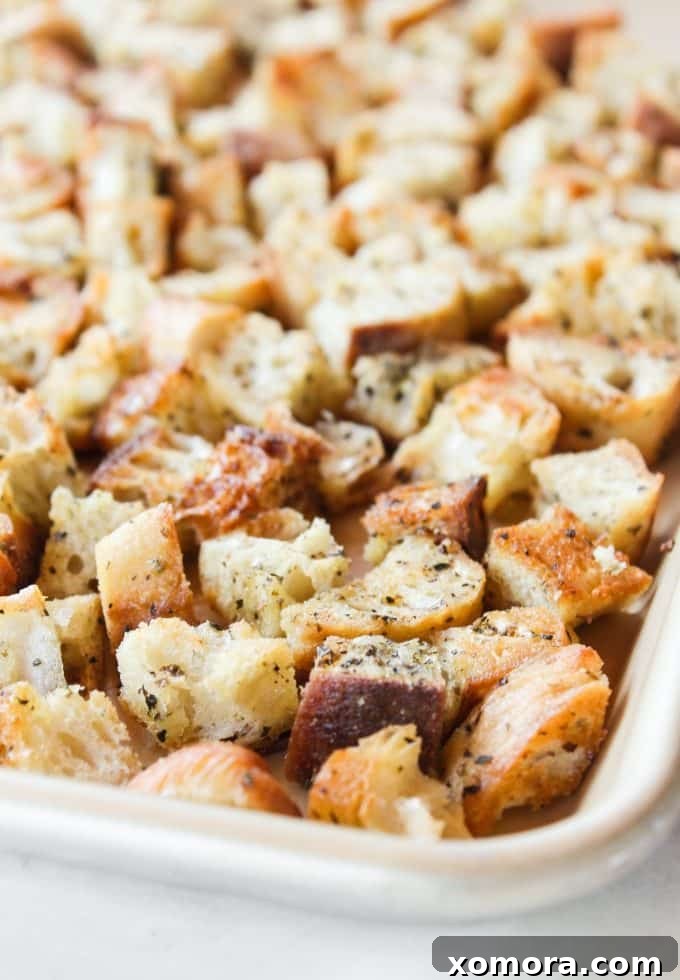
- Spread and Bake: Arrange the seasoned bread cubes in a single layer on a large baking sheet. This is critical for achieving maximum crispiness; overcrowding the pan will steam the bread rather than toast it, resulting in soft or unevenly cooked croutons. Place the baking sheet in a preheated oven and bake until the croutons are golden brown and wonderfully crispy. Keep a close eye on them towards the end, as baking times can vary slightly depending on your oven and the type of bread used.
The entire process, from cubing the bread to pulling out golden, fragrant croutons, takes approximately 15 minutes. It’s an incredibly efficient way to elevate almost any meal.
Essential Tips for Crouton Perfection
What Size Sheet Pan Should You Use?
The size of your baking sheet plays a more critical role than you might imagine in achieving perfectly crispy croutons. I consistently use a 12 x 17-inch baking sheet to ensure ample space for all the croutons. The key here is to spread the bread cubes in a single, even layer. If you use a pan that’s too small, the bread will inevitably pile up and overlap. This overcrowding leads to steaming instead of toasting, preventing your croutons from achieving that coveted crisp texture and causing them to cook unevenly. A larger pan allows for proper air circulation around each bread cube, which is essential for uniform browning and an ideal crunch.
Should You Use Parchment Paper?
The decision to use parchment paper on your baking sheet often depends on the specific ingredients of a recipe and their propensity to stick. While parchment paper is a fantastic tool for many baking endeavors, it’s not strictly necessary for this particular homemade crouton recipe. The generous amount of olive oil used to coat the bread cubes acts as a natural non-stick agent, creating a barrier that prevents them from adhering to the pan. This robust coating ensures that your croutons will lift easily from the baking sheet once they’re done, without any fuss or sticking. So feel free to skip the parchment paper and save it for when you truly need it!
What Bread is Best for Croutons?
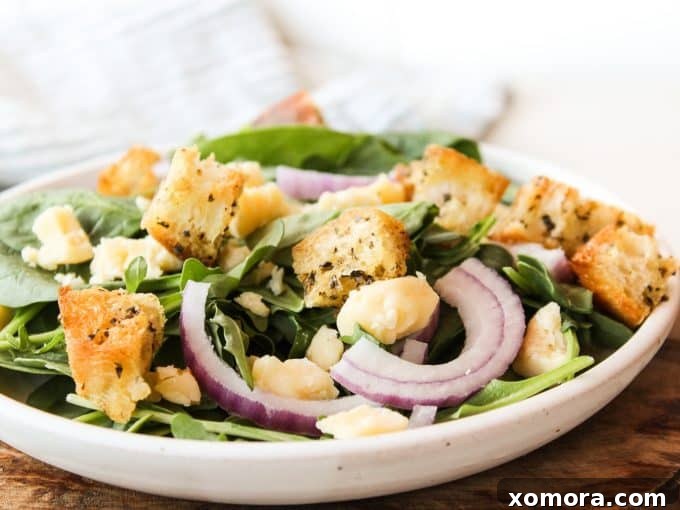
The beauty of making homemade croutons is that you have a wide array of bread choices, each offering a slightly different characteristic to the final product. My personal favorites are French baguette or sourdough bread. A French baguette provides a light, airy interior that crisps up beautifully, while sourdough offers a wonderful tangy depth and a slightly chewier texture once toasted. However, don’t feel limited! You can honestly use almost any bread you prefer or have on hand. Even plain white sandwich bread will work remarkably well, creating a lighter, more delicate crouton. For those with dietary restrictions, gluten-free bread is also an excellent option and toasts up just as nicely, ensuring everyone can enjoy these delightful additions to their meals.
Fresh Bread vs. Stale Bread
Both fresh and slightly stale bread can be used to make fantastic croutons, and each has its own advantages. Slightly older, day-old, or stale bread tends to crisp up faster in the oven because it contains less moisture. This means a slightly shorter baking time to achieve that perfect crunch. On the other hand, fresh bread also works wonderfully, though it might require an extra minute or two in the oven to fully dry out and become crispy. The difference in the final product is often minimal, so simply use whichever you have available. If your bread is very fresh, you can even pre-toast it lightly in the oven for 5-7 minutes before adding oil and seasonings to give it a head start on drying out.
How to Customize Your Homemade Croutons
This basic recipe for homemade croutons is incredibly versatile, serving as a perfect canvas for countless flavor variations. Adjusting the seasonings is an easy way to match them with specific dishes or simply cater to your personal taste. Here are some of my favorite ways to customize these delightful bites:
- Cheesy Delight: For a savory, umami boost, add about 3 tablespoons of finely grated Parmesan cheese or nutritional yeast to the bread cubes along with the other seasonings. The Parmesan will become wonderfully crisp and golden, while nutritional yeast offers a dairy-free cheesy flavor.
- Herb Swaps: While basil and oregano are classic, feel free to swap them out or add other dried herbs. Dill can provide a fresh, slightly tangy note, parsley brightens the flavor, and thyme adds an earthy, savory aroma. A blend of Italian seasoning is also a convenient choice for an all-in-one herb solution.
- Fresh Herb Infusion: For an even brighter, more vibrant flavor, use fresh herbs instead of dried. If you choose this route, I recommend chopping them finely and adding them after the baking is done. This prevents them from burning and helps preserve their delicate flavors and vibrant green color. Remember that fresh herbs are less potent than dried, so you’ll want to use approximately three times the amount of fresh herbs as you would dried. For this recipe, that would mean about one tablespoon of fresh basil and one tablespoon of fresh oregano.
- Spicy Kick: A pinch of red pepper flakes or a dash of cayenne pepper can add a subtle or pronounced heat, perfect for chili or hearty soups.
- Smoky Undertones: Add a touch of smoked paprika for a warm, smoky depth that complements roasted vegetables or bean soups.
- Garlic Lover’s Dream: If you’re a true garlic enthusiast, consider adding a small amount of fresh minced garlic (about 1-2 cloves) along with the garlic powder. Be cautious not to use too much, as fresh garlic can burn easily.
How to Store Homemade Croutons for Freshness
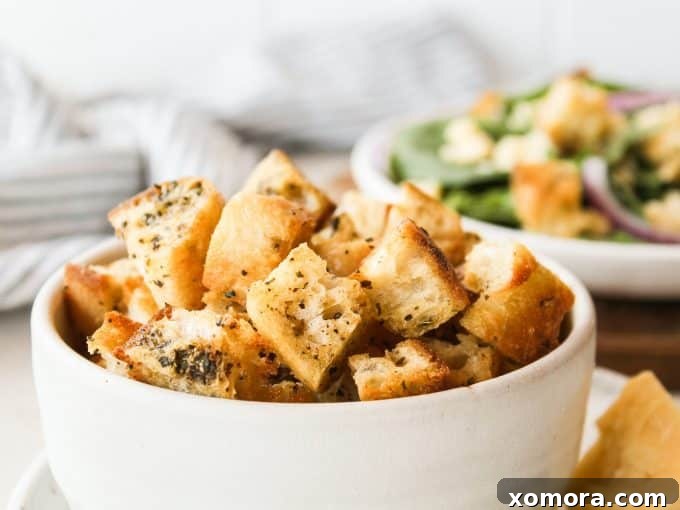
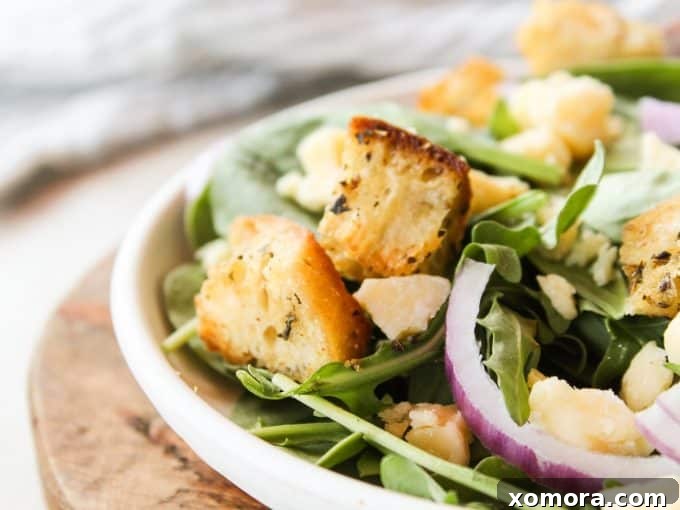
Proper storage is essential to maintain the crispness and flavor of your homemade croutons. Once completely cooled (this is very important to prevent condensation), transfer them to an airtight container. A glass jar with a tight-fitting lid or a resealable plastic container works perfectly. Store these containers at room temperature, away from direct sunlight or excessive heat. When stored correctly, your delicious homemade croutons will remain fresh, crispy, and flavorful for up to two weeks, making them an excellent meal prep component.
Creative Ways to Serve These Irresistible Croutons
The most obvious and beloved way to enjoy these delightful croutons is, of course, atop a fresh, crisp salad. They add an incomparable crunch and a burst of savory flavor that transforms any salad from good to extraordinary. When serving salads to guests, I always make my own croutons because they consistently elicit compliments and elevate the entire dining experience, despite requiring so little effort.
However, the versatility of homemade croutons extends far beyond salads:
- Soup’s Best Friend: Croutons are an incredible addition to almost any soup. Their crunchy texture provides a wonderful contrast to creamy or brothy soups. Imagine them floating on top of a rich tomato basil soup, adding depth and texture to a hearty chili, or providing a satisfying crunch to a comforting white chicken chili. There truly isn’t a soup that wouldn’t be more delicious with a generous handful of these golden bites.
- Breakfast Booster: Crumble them over scrambled eggs or an omelet for an unexpected savory crunch.
- Snack Attack: Honestly, these croutons are so flavorful, you might find yourself snacking on them straight from the container!
- Casserole Topping: Use them as a crunchy topping for baked casseroles, mac and cheese, or gratins, replacing breadcrumbs for a more substantial texture.
- Appetizer Base: Serve them alongside dips like hummus, spinach dip, or roasted red pepper dip for a flavorful alternative to crackers or bread.
No matter how you choose to enjoy them, these homemade croutons are sure to become a cherished recipe in your kitchen.
Explore More Delicious Recipes Like This:
Strawberry Basil Dressing
Strawberry Goat Cheese Salad
Balsamic Peach Arugula Salad
Easy Homemade Italian Dressing

Homemade Croutons
Christina
5 minutes
10 minutes
15 minutes
12
servings
Pin Recipe
Ingredients
-
6
cups
bread, cut into 1-inch cubes,
french baguette or sourdough work well -
1/3
cup
olive oil,
extra virgin -
1
tsp
dried basil -
1
tsp
dried oregano -
3/4
tsp
garlic powder -
1/2
tsp
salt
Instructions
-
Preheat oven to 375 degrees F (190 degrees C).
-
Add the cubed bread to a large ziplock bag or large bowl. Drizzle with olive oil and seasonings (dried basil, dried oregano, garlic powder, and salt). If using a bag, squeeze out excess air, seal, and shake until bread pieces are thoroughly coated. If using a bowl, stir and flip bread pieces until they’re evenly coated.
-
Spread the seasoned bread in a single layer on a 12 x 17-inch baking sheet. Place in the oven and bake for 10 minutes or until croutons are golden brown and crispy. (Baking time can vary based on the thickness of your croutons and oven, so start checking for crispiness after 10 minutes and add a few extra minutes if needed.)
-
Allow croutons to cool completely before storing in an airtight container at room temperature for up to 2 weeks to maintain freshness and crispness.
Nutrition
Serving:
0.5
cup
,
Calories:
54
kcal
,
Carbohydrates:
1
g
,
Protein:
1
g
,
Fat:
6
g
,
Saturated Fat:
1
g
,
Sodium:
97
mg
,
Potassium:
7
mg
,
Fiber:
1
g
,
Sugar:
1
g
,
Vitamin A:
3
IU
,
Vitamin C:
1
mg
,
Calcium:
5
mg
,
Iron:
1
mg
Nutrition information is automatically calculated, so should only be used as an approximation.