
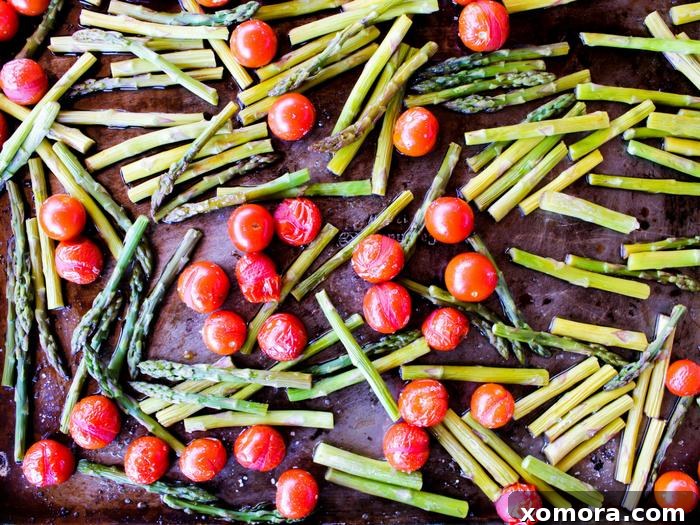
Roasted Balsamic Tomatoes & Asparagus: Your New Go-To Healthy Side Dish
There’s an undeniable magic that happens when vegetables meet the high heat of an oven. Roasting doesn’t just cook food; it transforms it, coaxing out incredible depths of flavor that other cooking methods simply can’t achieve. If you, like me, believe that everything tastes better roasted, then you’re in for a treat with this incredibly simple yet profoundly delicious recipe for Roasted Balsamic Tomatoes & Asparagus. This dish isn’t just a side; it’s a celebration of fresh, vibrant produce, enhanced by the sweet and tangy notes of balsamic vinegar and the irresistible caramelization that only roasting can provide.
In our busy lives, finding healthy and delicious side dishes that don’t demand hours in the kitchen can feel like a quest. This recipe rises to the challenge, requiring minimal effort and even less time. With just a few minutes of prep and a quick 10-15 minutes in the oven, you can have a beautifully cooked, wholesome vegetable dish ready to complement any meal, even on the busiest weeknights. Say goodbye to bland, steamed veggies and hello to a burst of savory sweetness that will make vegetables the star of your plate.
Why Roasting is the Ultimate Cooking Method for Vegetables
What exactly makes roasting so special? It’s all about concentration and caramelization. When vegetables are roasted at high temperatures, their natural sugars caramelize, creating a rich, sweet, and slightly smoky flavor profile that is far more complex than their raw counterparts. The dry heat of the oven also draws out moisture, intensifying the vegetables’ inherent flavors rather than diluting them. This process also develops a delightful textural contrast – tender interiors with beautifully crisp, slightly charred edges that are simply irresistible.
For dishes like our Roasted Balsamic Tomatoes & Asparagus, roasting brings out the best in each ingredient. Tomatoes become jammy and sweet, their skins bursting with concentrated flavor. Asparagus spears achieve a tender-crisp texture, retaining their earthy freshness while developing a subtle sweetness. It’s a game-changer for anyone looking to incorporate more vegetables into their diet in a way that truly excites the palate.
Meet the Stars of the Dish: Asparagus and Tomatoes
Both asparagus and tomatoes are nutritional powerhouses and incredibly versatile in the kitchen. When paired together and roasted, they create a harmonious blend of textures and tastes that is both comforting and sophisticated.
The Sweet Burst of Roasted Tomatoes
Have you ever experienced the sheer delight of a roasted tomato? If you typically enjoy tomatoes raw, get ready for a revelation. When grape or cherry tomatoes are exposed to the oven’s heat, they undergo a miraculous transformation. Their skins gently burst, releasing their juicy interiors, while their natural sugars caramelize, creating an intensely sweet and slightly tangy flavor. They become soft, succulent pockets of flavor, infinitely more delicious than when they’re left uncooked. The concentrated sweetness of roasted tomatoes provides a wonderful counterpoint to the vibrant, earthy notes of the asparagus.
Choosing the right tomatoes is key for this recipe. Grape or cherry tomatoes are ideal because of their small size, which allows them to cook quickly and evenly. Their thin skins are also perfect for that delightful burst. If you don’t have these on hand, small Roma tomatoes cut into quarters could work, though they might take a couple of extra minutes to soften.
The Perfect Crunch of Tender-Crisp Asparagus
Asparagus, with its distinctive earthy flavor and elegant appearance, is another vegetable that truly shines when roasted. Like tomatoes, asparagus doesn’t require a long cooking time. In fact, one of the biggest mistakes people make when cooking asparagus is overdoing it. Overcooked asparagus can become mushy, stringy, and lose its vibrant color and delicate texture. The goal is to achieve a “tender-crisp” texture – slightly firm with a satisfying snap when bitten.
When preparing asparagus, simply snap off the woody ends. You can do this by holding each spear at both ends and bending; it will naturally break where the tough part begins. For this recipe, cutting the spears into thirds ensures they cook evenly alongside the tomatoes and are easier to manage on a fork. The quick roasting time preserves their nutrients and ensures they retain that perfect bite, offering a delightful textural contrast to the soft, jammy tomatoes.
The Recipe: Roasted Balsamic Tomatoes & Asparagus
This recipe exemplifies simplicity and flavor. It’s designed for ease, making it accessible for even novice cooks, while delivering a taste that will impress everyone at the table.
Roasted Balsamic Tomatoes & Asparagus
This quick and flavorful side dish comes together in just 20 minutes, making it perfect for any meal!
- Prep time: 5 minutes
- Cook time: 10-15 minutes
- Total time: 15-20 minutes
- Yields: 6 servings
Ingredients
- 1 bunch fresh asparagus spears (about 1 pound)
- 1 pint grape or small cherry tomatoes
- 2 tablespoons extra virgin olive oil
- 2 tablespoons balsamic vinegar
- ¾ teaspoon salt (or to taste)
- Optional: Freshly ground black pepper, a pinch of garlic powder, or dried oregano for enhanced flavor
- Optional: Fresh basil or parsley, chopped, for garnish
Instructions
- Preheat Oven: Preheat your oven to 350°F (175°C). For easier cleanup, line a large baking sheet with parchment paper.
- Prepare Asparagus: Wash the asparagus spears thoroughly. Snap off the tough, woody ends. A quick way to do this is to hold an asparagus spear by both ends and bend it; it will naturally break at the point where the tender part begins. Cut the remaining tender parts of the asparagus into thirds (about 1-2 inch pieces).
- Prepare Tomatoes: Wash the grape or cherry tomatoes. There’s no need to cut them; they will burst naturally during roasting.
- Arrange Vegetables: Spread the cut asparagus and whole tomatoes evenly in a single layer on the prepared baking sheet. Ensure they are not overcrowded, as this can steam the vegetables instead of roasting them. If your sheet is too crowded, use two sheets.
- Season: Drizzle the olive oil evenly over the vegetables, ensuring they are lightly coated. Follow with a drizzle of balsamic vinegar. Sprinkle generously with salt and any optional seasonings like black pepper, garlic powder, or dried oregano.
- Roast: Bake in the preheated oven for 10-15 minutes. The vegetables are done when the tomatoes have softened and slightly burst, and the asparagus is tender-crisp, meaning it still has a slight bite and isn’t mushy.
- Serve: Carefully remove the baking sheet from the oven. Transfer the roasted balsamic tomatoes and asparagus to a serving dish. Garnish with fresh chopped basil or parsley, if desired, and serve immediately.
Nutrition (per serving, approximate)
Nutrition information is automatically calculated, so should only be used as an approximation.
- Calories: 74 kcal
- Carbohydrates: 6g
- Fat: 4g
- Sodium: 300mg
- Potassium: 329mg
- Fiber: 1g
- Sugar: 4g
- Vitamin A: 950 IU
- Vitamin C: 23.8mg
- Calcium: 27mg
- Iron: 2mg
Expert Tips for Perfect Roasting Every Time
While this recipe is straightforward, a few simple tips can elevate your roasted vegetables from good to absolutely outstanding:
- Don’t Overcrowd the Pan: This is perhaps the most crucial rule for roasting. If you cram too many vegetables onto one baking sheet, they will steam instead of roast, resulting in soggy rather than crispy textures. Give your vegetables space to breathe and brown beautifully. Use two baking sheets if necessary.
- High Quality Ingredients: Since this recipe uses minimal ingredients, the quality truly shines through. Opt for fresh, vibrant asparagus and ripe, firm tomatoes. A good quality balsamic vinegar will also make a noticeable difference in the final flavor.
- Even Coating: Ensure all vegetables are evenly coated with olive oil and balsamic vinegar. This helps with caramelization and ensures every bite is flavorful. Tossing them in a bowl before spreading them on the sheet can help, or simply toss them directly on the baking sheet with your hands.
- Parchment Paper is Your Friend: Lining your baking sheet with parchment paper not only makes for effortless cleanup but also helps prevent sticking and promotes even cooking.
- Monitor Your Oven: Ovens can vary. Keep an eye on your vegetables, especially during the last few minutes, to achieve your desired level of doneness and avoid overcooking, particularly the asparagus.
Customization & Variations to Explore
One of the beauties of roasted vegetables is their versatility. This basic recipe for Roasted Balsamic Tomatoes & Asparagus serves as an excellent foundation for endless variations:
- Herb Power: Enhance the flavor with fresh herbs like finely chopped rosemary or thyme, added with the salt. A sprinkle of fresh basil or parsley after roasting adds a burst of freshness.
- Garlic Lover’s Dream: Add a few cloves of minced garlic or a teaspoon of garlic powder along with the salt for an aromatic kick.
- Cheesy Goodness: A sprinkle of grated Parmesan cheese during the last few minutes of roasting, or crumbled feta cheese added just before serving, can add a savory, salty dimension.
- Spice it Up: For a touch of heat, add a pinch of red pepper flakes with the other seasonings.
- Other Veggies: Feel free to add other quick-cooking vegetables like sliced bell peppers, zucchini, or thinly sliced red onion. Adjust cooking time slightly if needed.
- Sweet & Savory: A drizzle of honey or maple syrup with the balsamic vinegar can intensify the sweetness and create a richer glaze.
Serving Suggestions: Making it a Meal
This vibrant side dish is incredibly versatile and can accompany a wide range of main courses:
- Protein Power: It pairs beautifully with grilled chicken, baked salmon, pan-seared steak, or roasted pork tenderloin.
- Pasta Perfection: Toss the roasted vegetables with your favorite pasta, a little extra olive oil, and perhaps some feta or Parmesan for a light and flavorful meal.
- Grain Bowls: Add them to a hearty grain bowl with quinoa, farro, or brown rice for a wholesome and nutritious lunch or dinner.
- Eggs-cellent Addition: Serve alongside scrambled eggs or an omelet for a sophisticated breakfast or brunch.
- Salad Boost: Let them cool slightly and add them to a green salad for extra flavor and texture.
Health Benefits: A Delicious Way to Nourish Your Body
Beyond their incredible taste, both asparagus and tomatoes offer a wealth of health benefits:
- Asparagus: Rich in vitamins K, A, C, and folate, asparagus is also a good source of fiber, antioxidants, and anti-inflammatory compounds. It supports bone health, digestion, and provides detoxifying properties.
- Tomatoes: Packed with vitamin C, potassium, and K, tomatoes are best known for their high content of lycopene, a powerful antioxidant linked to reduced risk of heart disease and certain cancers. Roasting actually increases the bioavailability of lycopene, making this dish even more beneficial!
Together, these vegetables create a dish that is low in calories, high in nutrients, and bursting with flavor, making it an excellent choice for a healthy lifestyle.
Frequently Asked Questions (FAQs)
Can I prepare the vegetables ahead of time?
You can wash and cut the asparagus a day in advance and store it in an airtight container in the refrigerator. Wash the tomatoes just before roasting. For best results, season and roast the vegetables right before serving to maintain their optimal texture and flavor.
What if I don’t have balsamic vinegar?
While balsamic vinegar adds a unique sweet and tangy depth, you could substitute it with a splash of red wine vinegar mixed with a tiny pinch of sugar, or even just a squeeze of fresh lemon juice for brightness, though the flavor profile will be different.
How do I know when the asparagus is perfectly cooked?
Asparagus is perfectly cooked when it’s tender-crisp. It should be bright green, slightly pliable but still have a firm bite, not limp or mushy. The tips might be slightly browned. Test a piece with a fork or by tasting one.
Can I use a higher oven temperature to cook them faster?
While some vegetables benefit from higher heat, 350°F (175°C) is ideal for this recipe to allow the tomatoes to soften and burst gently without scorching them, and to ensure the asparagus cooks through without becoming tough on the outside. Going much higher might dry out the asparagus or burn the balsamic vinegar.
Can I add other seasonings besides salt?
Absolutely! Feel free to experiment with your favorite herbs and spices. Garlic powder, onion powder, dried oregano, dried thyme, or even a dash of smoked paprika can add fantastic complexity to the dish.
Embrace the Simplicity and Flavor
This Roasted Balsamic Tomatoes & Asparagus recipe is a testament to the fact that healthy eating doesn’t have to be complicated or time-consuming. With minimal ingredients and effort, you can create a side dish that is bursting with flavor, rich in nutrients, and appealing to everyone at the table. It’s a versatile staple that will quickly earn a permanent spot in your weekly meal rotation.
So, the next time you’re looking for a quick, healthy, and incredibly delicious way to get more vegetables into your diet, remember the magic of roasting. Give this recipe a try and experience firsthand how simple ingredients can create something truly extraordinary.
Want to try other fantastic roasted vegetable recipes? Expand your culinary horizons with my Roasted Parsley Carrots, these delightful Smashed & Roasted Rosemary Garlic Potatoes, the unexpectedly delicious Roasted Red Cabbage, or my crowd-pleasing Roasted Brussels Sprouts. Each one offers a unique and flavorful way to enjoy the goodness of roasted vegetables!