
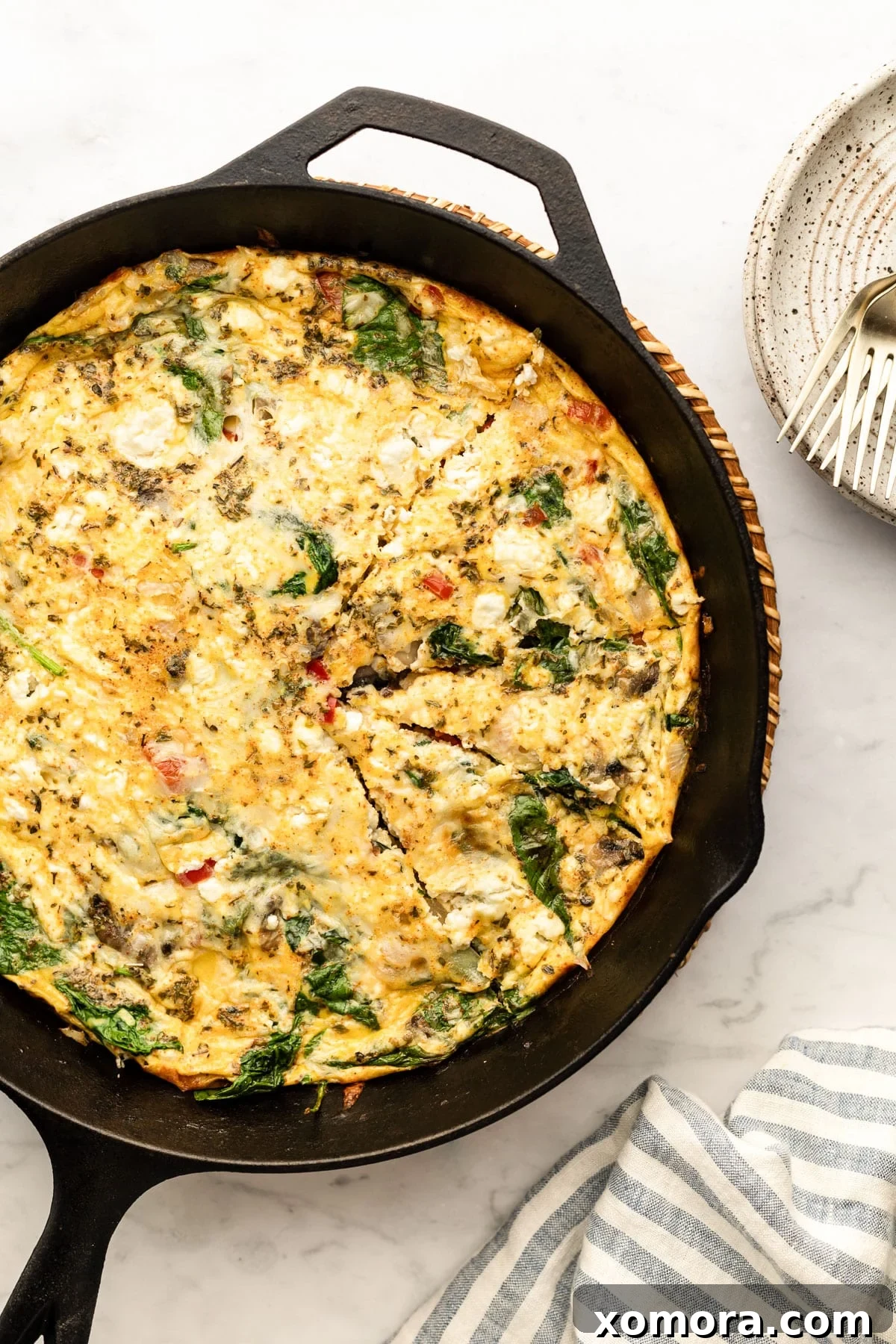
Unlock the secret to an effortlessly elegant and incredibly flavorful meal with this delightful Vegetable Frittata. Far more than just a simple egg dish, this recipe transforms humble ingredients into a show-stopping creation, perfect for any time of day. Featuring a harmonious blend of two distinct cheeses and a bounty of fresh vegetables, it’s a dish that promises both ease of preparation and impressive results. Whether you’re seeking a hearty breakfast, a light lunch, or a sophisticated brunch centerpiece, this frittata is your answer. Serve it alongside roasted potatoes, a crisp side salad, or a medley of fresh fruit for a complete and satisfying experience that will leave everyone asking for the recipe.
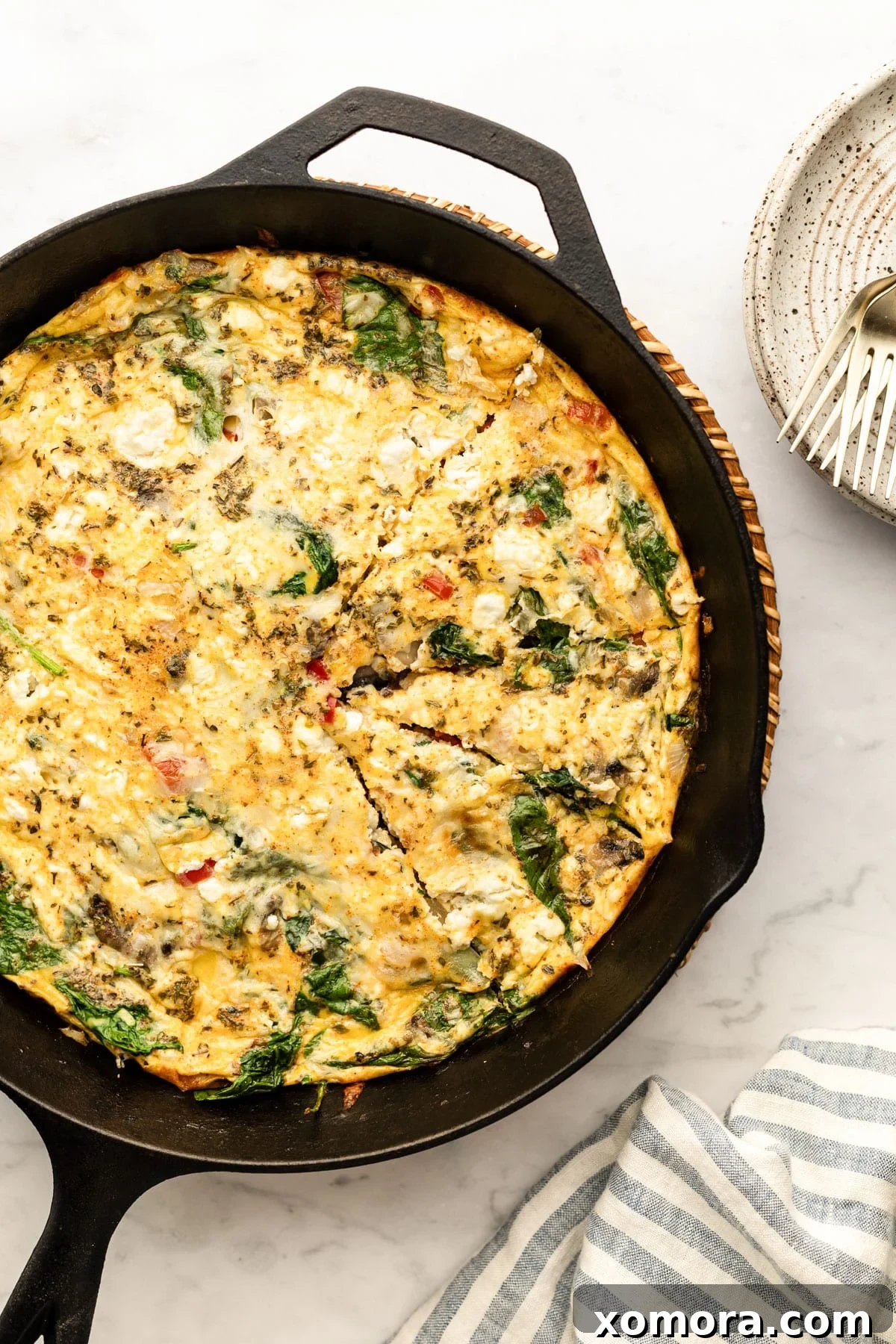
Mastering the Art of Frittatas: A Culinary Delight for Every Skill Level
Have you ever found yourself intimidated by the thought of making a frittata? Don’t be! I often describe a frittata as the ultimate culinary chameleon – it’s essentially a crustless quiche, or perhaps a generously sized and wonderfully fluffy omelet, baked to perfection. The beauty of a frittata lies in its deceptive simplicity. It presents with an air of sophistication, making it ideal for entertaining guests, yet it requires minimal effort and basic cooking skills. This makes it an incredibly accessible dish for both novice and experienced cooks alike.
The true magic of frittatas, however, lies in their limitless versatility. The possibilities for fillings are genuinely endless, allowing you to get creative with whatever ingredients you have on hand or whatever flavors you’re craving. This particular Vegetable Frittata highlights the incredible synergy of flavors and textures that can be achieved with thoughtful ingredient selection.
The Perfect Cheese & Veggie Combination
Our star Vegetable Frittata features a dynamic duo of cheeses, each playing a crucial role in creating a rich and satisfying profile. We incorporate creamy, melt-in-your-mouth mozzarella, which delivers that desired gooey stretch, perfectly complementing the fluffy eggs. Alongside it, tangy feta cheese adds a delightful salty zest and a wonderfully crumbly texture contrast, elevating the overall experience. These two cheeses are truly a match made in culinary heaven, providing depth and character to every bite.
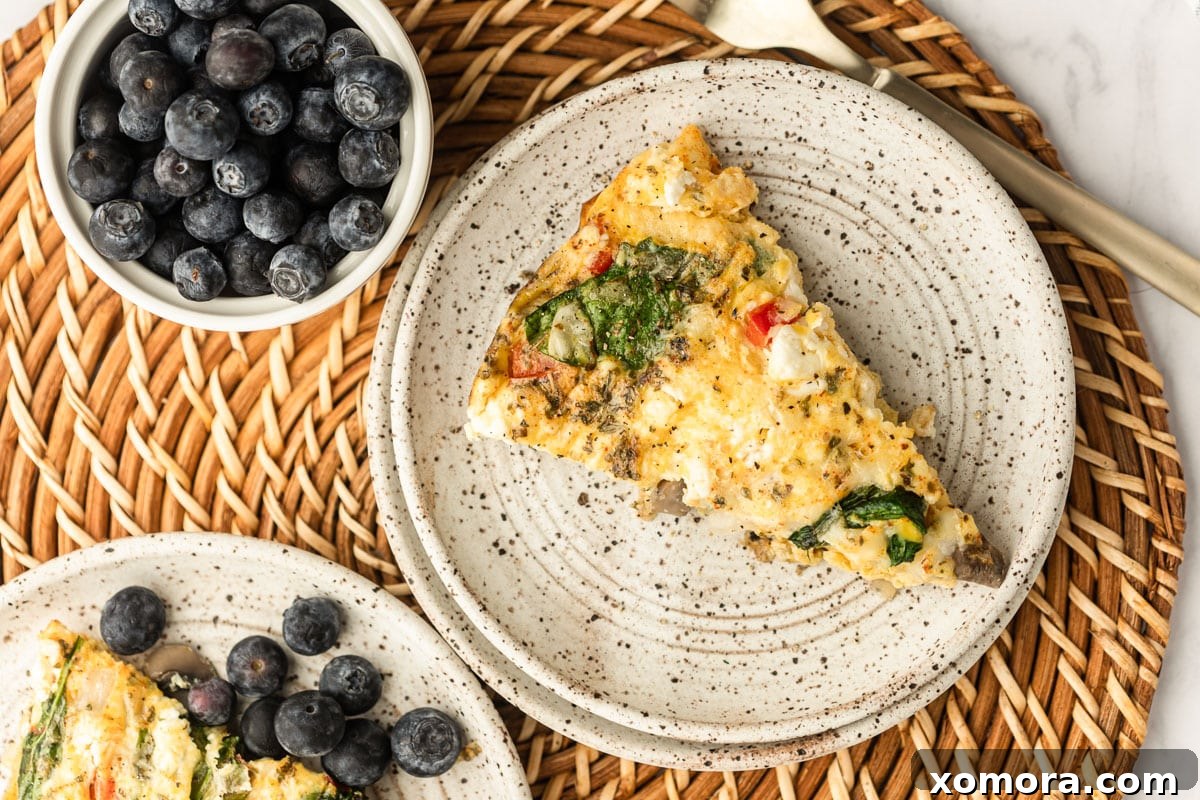
Beyond the cheeses, this entrée is generously packed with vibrant, fresh vegetables that not only contribute essential nutrients but also add incredible flavor and substance. Sautéed onions provide a foundational sweetness, while crisp bell peppers introduce a touch of vibrant color and a mild, earthy crunch. Earthy mushrooms add an umami richness, and tender spinach wilts into the mixture, infusing it with a subtle, leafy freshness. The end result is a frittata that’s bursting with robust flavor, beautifully textured, and visually stunning. It’s a dish that truly satisfies all the senses.
Beyond Breakfast: When to Enjoy Your Vegetable Frittata
While often associated with breakfast and brunch, this versatile Vegetable Frittata transcends traditional mealtime boundaries. It’s truly a dish for all occasions:
- A Show-Stopping Weekend Breakfast: Impress your family or guests with a gourmet-style breakfast that feels special without requiring hours in the kitchen. Its elegant presentation makes it perfect for a leisurely weekend morning.
- An Effortless Weekday Meal Prep Solution: Prepare this frittata on a Sunday, and enjoy healthy, satisfying breakfasts or lunches throughout the busy workweek. It reheats beautifully, making meal planning a breeze.
- The Star of Your Next Brunch Gathering: Hosting a crowd? This frittata is substantial enough to be a main course and pairs wonderfully with other brunch favorites. Its vibrant colors and inviting aroma are sure to be a hit.
- A Quick & Healthy Weeknight Dinner: Don’t limit frittatas to the morning! When paired with a simple side salad, it makes for a surprisingly quick, nutritious, and incredibly satisfying dinner option, especially on those evenings when you’re short on time.
Embrace the flexibility of this recipe and let it become a staple in your culinary repertoire.
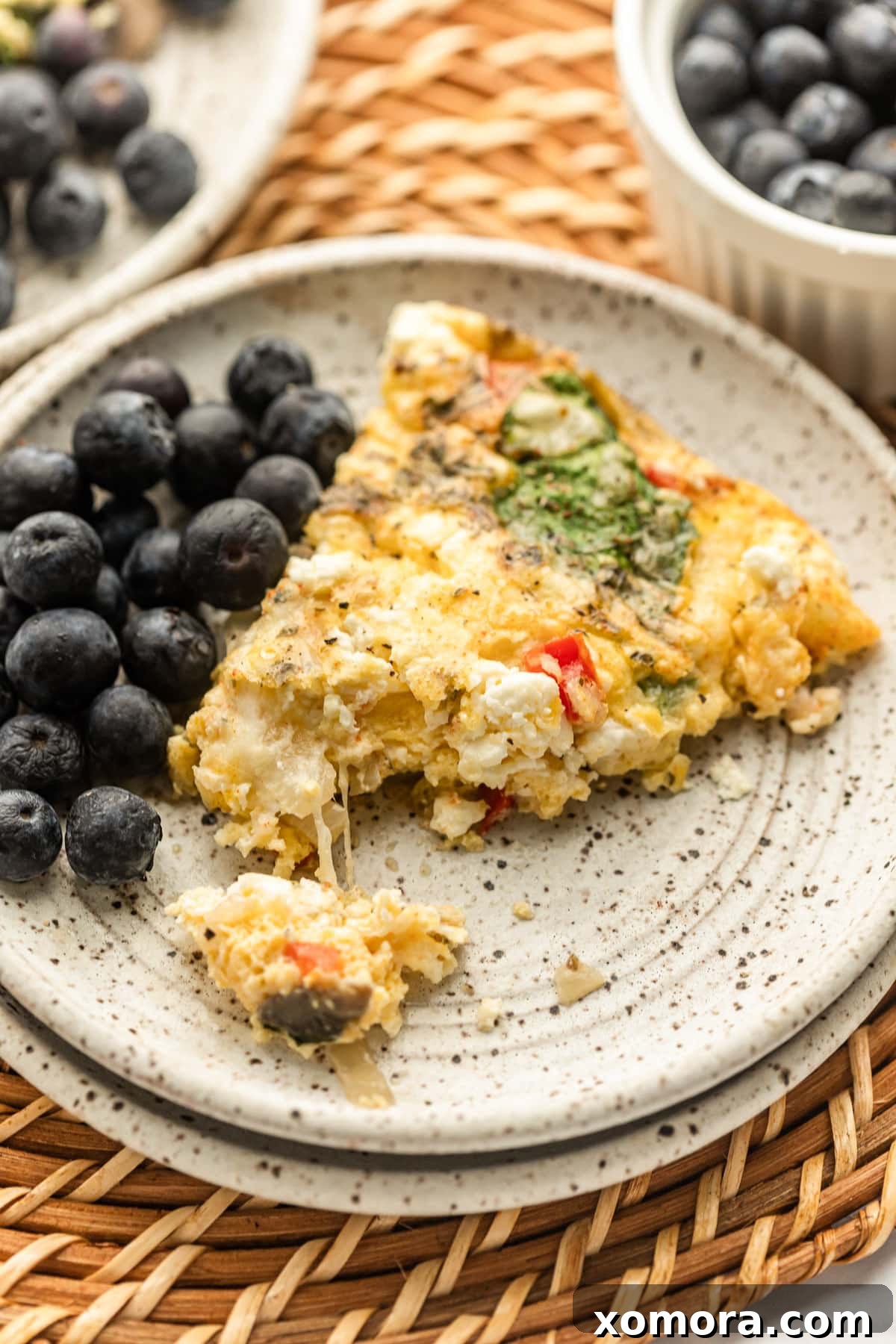
Essential Ingredients for Your Perfect Vegetable Frittata
Crafting this delightful frittata begins with a selection of fresh, wholesome ingredients. While the full, detailed list and step-by-step instructions are provided in the recipe card below, here’s an overview of what you’ll need to gather:
- Olive Oil: Essential for sautéing your vegetables, providing a rich, aromatic base. You can also use avocado oil.
- White or Yellow Onion: Diced to release its sweet, savory notes as it cooks.
- Red Bell Pepper: Adds a touch of sweetness, vibrant color, and crisp texture.
- Sliced Mushrooms: Baby portabella are highly recommended for their earthy flavor, but any sliced mushrooms will work beautifully. Be sure to cut larger ones into smaller pieces.
- Fresh Spinach: A generous handful wilts down to provide a healthy dose of greens and a delicate flavor.
- Minced Garlic: Crucial for adding an aromatic depth and pungent flavor that elevates the entire dish.
- Large Eggs: The foundation of your frittata, providing protein and binding all the delicious components together.
- Milk: A splash of milk (or cream) helps achieve that wonderfully light and fluffy texture.
- Shredded Mozzarella Cheese: For that irresistible, melty stretch.
- Feta Cheese: Crumbled feta introduces a desirable salty tang and unique texture contrast.
- Seasonings: A blend of dried oregano, salt, ground mustard, cayenne pepper, and black pepper to perfectly balance and enhance the flavors. These spices add a subtle warmth and complexity without overpowering the fresh ingredients.
The Simple Process: From Skillet to Table
The beauty of this recipe lies in its straightforward approach. You’ll begin by sautéing your hardier vegetables—mushrooms, onion, and bell pepper—in a trusty cast iron skillet. This initial step is key to developing their flavors and softening their textures. Towards the end of the sautéing process, fragrant minced garlic and fresh spinach are added, wilting quickly into the mixture. While the vegetables are cooking, you’ll whisk together the eggs, milk, and a carefully chosen blend of seasonings, creating the liquid foundation for your frittata. Once the vegetables are perfectly tender, they’re spread evenly across the skillet, topped with generous layers of shredded mozzarella and crumbled feta. Finally, the egg mixture is poured over everything, and the skillet is transferred to the oven to bake until golden, puffed, and just set. It’s a seamless transition from stovetop to oven, minimizing cleanup and maximizing flavor.
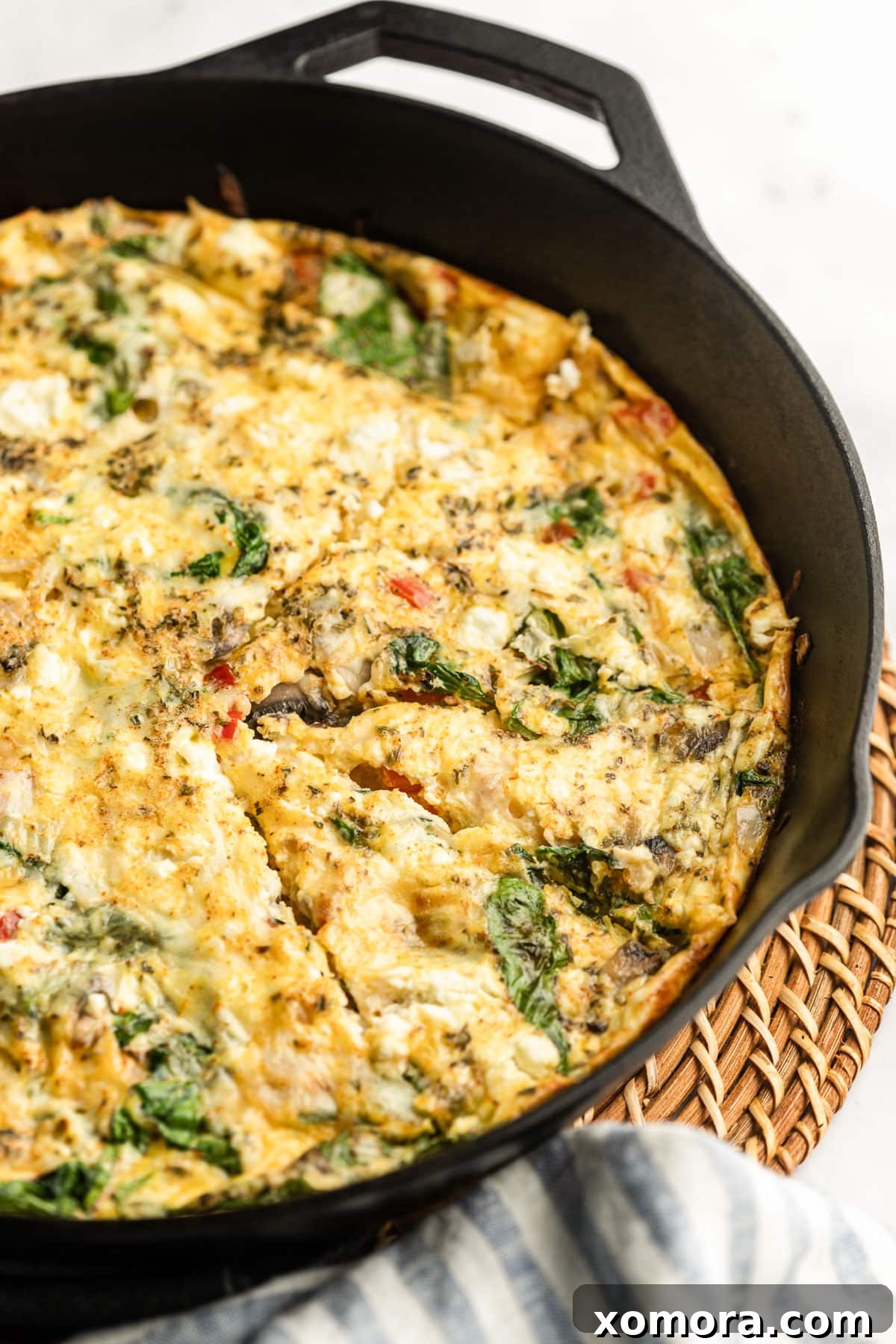
Choosing the Ideal Cast Iron Skillet for Your Frittata
When it comes to preparing the perfect frittata, the right cooking vessel makes all the difference, and a cast iron skillet is truly unparalleled. Cast iron skillets are celebrated for their exceptional heat retention and even heat distribution, which are crucial for achieving a beautifully cooked frittata with a golden-brown bottom and a perfectly set, fluffy top. They also offer the distinct advantage of being oven-safe, allowing for a seamless transition from stovetop sautéing to oven baking without having to transfer ingredients to another dish – a definite win for minimizing cleanup!
While cast iron skillets come in a range of sizes, the most commonly found are 10-inch and 12-inch. For frittata recipes, I wholeheartedly recommend and personally use a 10-inch cast iron skillet. This size provides the ideal depth for a substantial, fluffy frittata, yielding slices that are satisfyingly thick and visually appealing. While I adore my 12-inch skillet for tasks like frying bacon or cooking larger meals, it can cause your frittata mixture to spread too thinly. This often results in a frittata that’s not only less impressive in height but also more prone to overcooking and drying out. Sticking with a 10-inch skillet ensures a robust, perfectly proportioned frittata every time.
Essential Cast Iron Skillet Care and Maintenance
A well-maintained cast iron skillet is a cook’s best friend. When properly seasoned, cast iron develops a naturally nonstick surface, meaning your frittata should slide out effortlessly. However, if your skillet has been neglected or isn’t well cared for, sticking can indeed become an issue. A little preventative care goes a long way in ensuring your cooking experience is always a joy.
If you have any concerns about the current state of your skillet’s seasoning, or if it feels a bit rough or dry, take a moment to wipe it down with a very thin layer of olive oil (or other high-smoke point oil like avocado or grapeseed oil) before adding your ingredients for this frittata recipe. This creates an extra barrier and helps prevent sticking.
Post-Use Care: After each use, once your skillet has cooled slightly, wash it with warm water and a brush or non-abrasive sponge. Avoid harsh soaps if you want to preserve the seasoning, though a small amount of mild dish soap is generally fine on well-seasoned cast iron. The most crucial step is to dry it thoroughly immediately after washing. Any residual moisture can lead to rust. After drying, place the skillet back on low heat on the stovetop for a minute or two to ensure it’s completely dry. Finally, wipe the inside of your skillet with a very thin layer of olive oil (or other cooking oil), just enough so that the surface looks glossy and has a light sheen. You don’t want any oil to pool or settle when you put the skillet away, as this can lead to a sticky residue over time. With consistent care, you’ll not only rekindle your love for cast iron cooking but also enjoy its incredible performance for years to come.
Can You Use a Pie Plate or Other Baking Dish?
One of the many advantages of using a cast iron skillet for this frittata recipe is its dual functionality: it transitions seamlessly from the stovetop to the oven. This means you can sauté your vegetables and bake your frittata all in the same pan, which is fantastic for minimizing cleanup and streamlining your cooking process!
However, if you don’t own a cast iron skillet or prefer to use another type of bakeware, you absolutely can! A standard pie plate or a 10 x 10 inch baking dish works perfectly well as an alternative. It’s important to note the size recommendation here: I do not recommend using a baking dish larger than 10 x 10 inches. If the egg mixture spreads too far in a larger dish, it will result in a very thin frittata that is likely to overcook and become rubbery rather than fluffy and tender. The ideal depth ensures a rich, satisfying texture.
Since most pie plates and standard baking dishes are not designed for stovetop use, you’ll need to adjust your cooking method slightly. You will first sauté the vegetables in a separate skillet on your stovetop until they are tender and flavorful. Once cooked, transfer the sautéed vegetables to your chosen baking dish before pouring in the egg mixture and proceeding with the baking steps. It’s a small extra step, but it allows you to enjoy this delicious frittata even without cast iron.
Making Ahead: Can You Prep This Frittata in Advance?
Absolutely, this Vegetable Frittata is an excellent candidate for meal prepping and advanced preparation, making your mornings or busy meal times incredibly easy! The ability to prepare components ahead of time is one of the many reasons frittatas are a favorite for efficient cooks.
You can certainly make the entire frittata the night before. Once baked and cooled slightly, cover it tightly with a lid or aluminum foil and refrigerate it overnight. The next morning, simply remove the lid or foil and reheat the frittata in a preheated oven until it’s warmed through. This method allows the flavors to meld beautifully overnight, potentially even enhancing the taste. It’s perfect for a stress-free breakfast or brunch when you want to minimize morning fuss.
For even more flexibility, you can also prepare the vegetable filling (sautéing the onions, bell peppers, mushrooms, and spinach) in advance. Cook the vegetables as directed, let them cool, and then store them in an airtight container in the refrigerator for up to 2-3 days. When you’re ready to bake, simply spread the pre-cooked vegetables in your skillet or baking dish, whisk the eggs and milk, pour over the veggies, and bake! This cuts down on active cooking time significantly on the day you plan to serve it.
Freezing Frittatas for Future Meals: A Meal Prep Game-Changer
Yes, you can absolutely freeze this frittata! Freezing is a fantastic way to extend its shelf life and have convenient, healthy meals ready to go whenever you need them. While some people express reservations about reheating eggs, often fearing a change in texture, frittatas tend to fare exceptionally well in the freezer and when reheated. I personally find that the texture of a frittata remains excellent whether it’s enjoyed fresh out of the oven or after being frozen and reheated.
To Freeze Your Frittata:
- Cool Completely: Allow the baked frittata to cool entirely to room temperature. This is a crucial step to prevent ice crystals from forming, which can affect texture.
- Slice and Portion: Once cooled, slice the frittata into individual portions or wedges. This makes it much easier to thaw and reheat only what you need, reducing waste.
- Wrap Tightly: Wrap each individual slice securely in plastic wrap, then either aluminum foil or parchment paper to prevent freezer burn.
- Store in an Airtight Container: Place the wrapped frittata slices in a freezer-safe, airtight container or a heavy-duty freezer bag. Label with the date.
- Freeze: Store in the freezer for up to 2-3 months for best quality.
To Thaw and Reheat:
When you’re ready to enjoy a frozen slice, you have a few options:
- Thaw Overnight: For best results, transfer slices from the freezer to the refrigerator to thaw overnight.
- Microwave: For a quick reheat, place a thawed (or even frozen, with slightly longer heating time) slice on a microwave-safe plate. Heat in 30-60 second intervals until warmed through. Be careful not to overcook, as this can make the eggs rubbery.
- Oven: Preheat your oven to 350°F (175°C). Place thawed slices on a baking sheet and heat for about 10-15 minutes, or until warmed through. This method often yields a slightly crisper exterior.
Having frozen frittata slices on hand is a perfect solution for busy mornings or whenever you need a nutritious, quick meal.
How to Store Leftovers Safely
If you find yourself with any delicious frittata leftovers (a rare occurrence, I’m sure!), proper storage is key to maintaining its freshness and safety. Once the frittata has cooled completely to room temperature, transfer any remaining slices to an airtight container. Store this container in the refrigerator, where the frittata will remain fresh and flavorful for up to 4 days. Always ensure it’s fully cooled before refrigerating to prevent condensation and maintain texture.
Perfect Pairings: How to Serve This Versatile Frittata
This Vegetable Frittata is a complete meal in itself, but it truly shines when accompanied by thoughtful side dishes. Its versatility allows for a range of pairings, depending on the meal and your preferences:
- Hearty Potatoes: A classic pairing! Serve with crispy roasted potatoes, simple home fries, or a creamy potato gratin for a satisfying and traditional breakfast or brunch.
- Fresh Fruit Medley: For a lighter, refreshing contrast, a bowl of seasonal fresh fruit (berries, melon, grapes) adds natural sweetness and vibrant color.
- Simple Side Salad: Elevate your frittata to a lunch or dinner entrée with a crisp green salad. A light vinaigrette dressing with fresh herbs would complement the rich flavors of the frittata beautifully.
- Toasted Artisan Bread: A slice of crusty bread or a warm croissant can be perfect for soaking up any delicious juices or just for an added texture.
- Avocado Slices: Creamy avocado adds a healthy fat and a refreshing counterpoint to the baked eggs and cheese.
- Hot Sauce or Salsa: For those who enjoy a little kick, a dash of your favorite hot sauce or a dollop of fresh salsa can add an exciting layer of flavor.
No matter how you choose to serve it, this Vegetable Frittata is sure to be a crowd-pleaser.
More delicious breakfast recipes to explore:
Broccoli Cheddar Egg Muffins
Beef and Cheese Egg Muffins
Cheeseburger Frittata
Broccoli Cheddar Frittata
Sausage and Cheddar Breakfast Casserole
Parmesan Herb Frittata

Vegetable Frittata
Pin Recipe
Ingredients
- 1 tablespoon olive or avocado oil
- ½ white or yellow onion, diced
- ½ red bell pepper, diced
- 1 cup sliced mushrooms, I prefer baby portabella. If any are large cut them into thirds or fourths.
- handful fresh spinach leaves
- 1 tablespoon garlic, minced
To Finish
- 8 eggs
- ½ cup milk
- 1 teaspoon dried oregano
- ¾ teaspoon salt
- ¼ teaspoon ground mustard
- ¼ teaspoon cayenne pepper
- ¼ teaspoon black pepper
- 1 cup shredded mozzarella cheese
- ½ cup feta cheese
Instructions
- Preheat oven to 425 degrees Fahrenheit (220°C).
- Add oil to a 10-inch cast iron skillet over medium to medium-high heat. Once the oil is hot, add the sliced mushrooms, diced onion, and diced bell pepper to the skillet. Sauté, stirring occasionally, until the vegetables are tender and slightly softened, about 5-7 minutes. Then, stir in the minced garlic and fresh spinach. Continue to sauté for about one minute, or until the spinach has completely wilted.
- Meanwhile, in a separate medium bowl, whisk together the eggs, milk, dried oregano, salt, ground mustard, cayenne pepper, and black pepper until well combined and slightly frothy.
- When the vegetables are done cooking, turn off the stove. Spread the sautéed vegetables evenly across the bottom of the skillet. Evenly layer the shredded mozzarella cheese and crumbled feta cheese on top of the vegetables. Carefully pour the whisked egg mixture over all the ingredients in the skillet, ensuring even distribution.
- Transfer the skillet to the preheated oven. Bake for 23 to 28 minutes, or until the center of the frittata is just set and lightly golden. (Note: This frittata may take slightly longer to cook than other recipes due to the generous quantity of vegetables.) Gently jiggle the skillet to check that the center is no longer overly wiggly before removing it from the oven. Let the frittata rest for a few minutes before slicing; it will puff up considerably in the oven and then settle as it rests.
- Slice the warm frittata into wedges and serve immediately with your choice of fresh fruit, a side salad, or roasted potatoes.
Nutrition
Serving: 1 slice, Calories: 165kcal, Carbohydrates: 4g, Protein: 11g, Fat: 12g, Saturated Fat: 5g, Polyunsaturated Fat: 1g, Monounsaturated Fat: 4g, Trans Fat: 1g, Cholesterol: 185mg, Sodium: 482mg, Potassium: 174mg, Fiber: 1g, Sugar: 2g, Vitamin A: 660IU, Vitamin C: 11mg, Calcium: 169mg, Iron: 1mg
Nutrition information is automatically calculated and should only be used as an approximation.
Like this? Leave a comment below!