
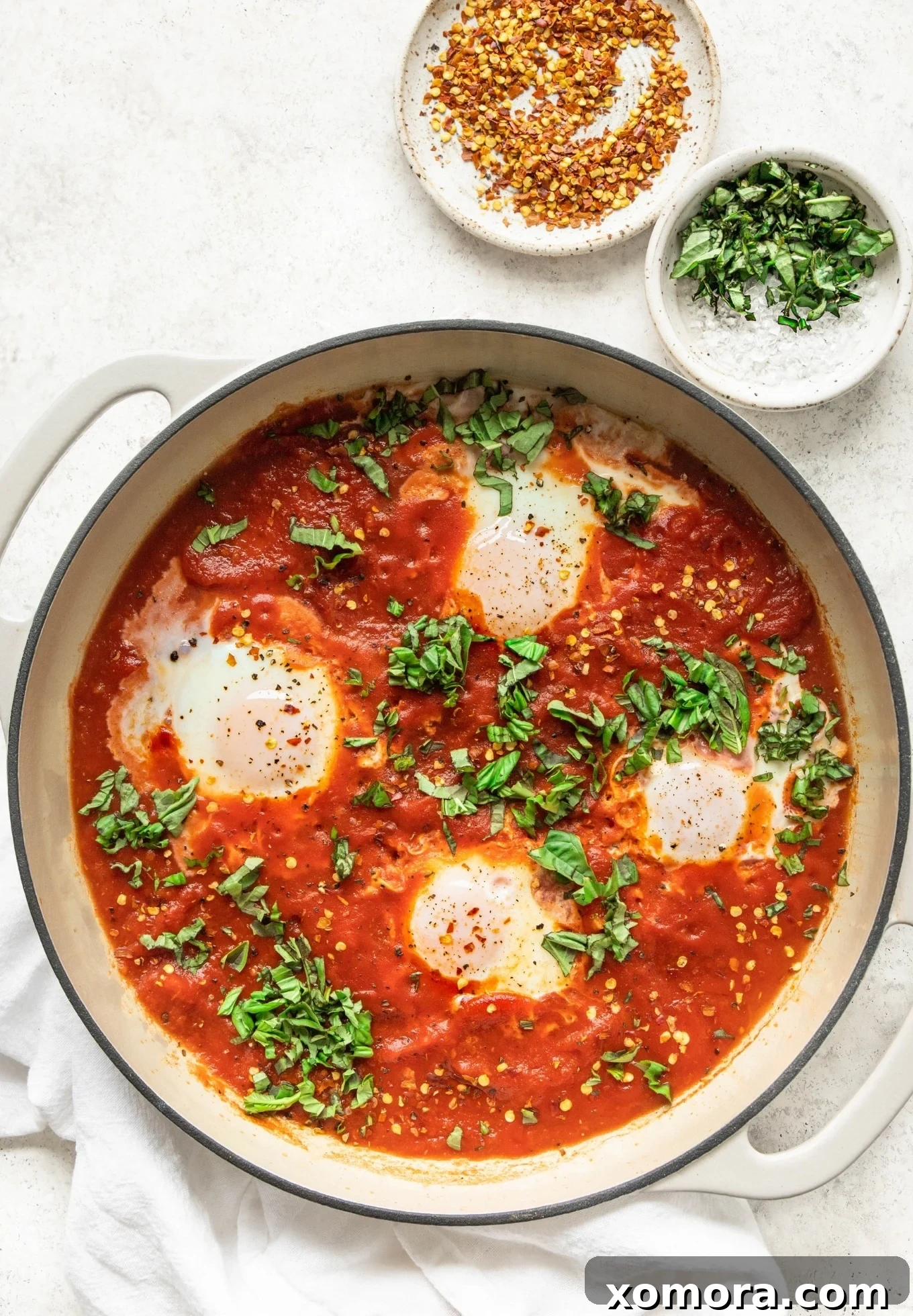
Feeling a little tired of standard breakfast fare, or perhaps searching for a vibrant dinner idea? This Shakshuka recipe is guaranteed to shake up your morning routine or become a beloved part of your evening meals!
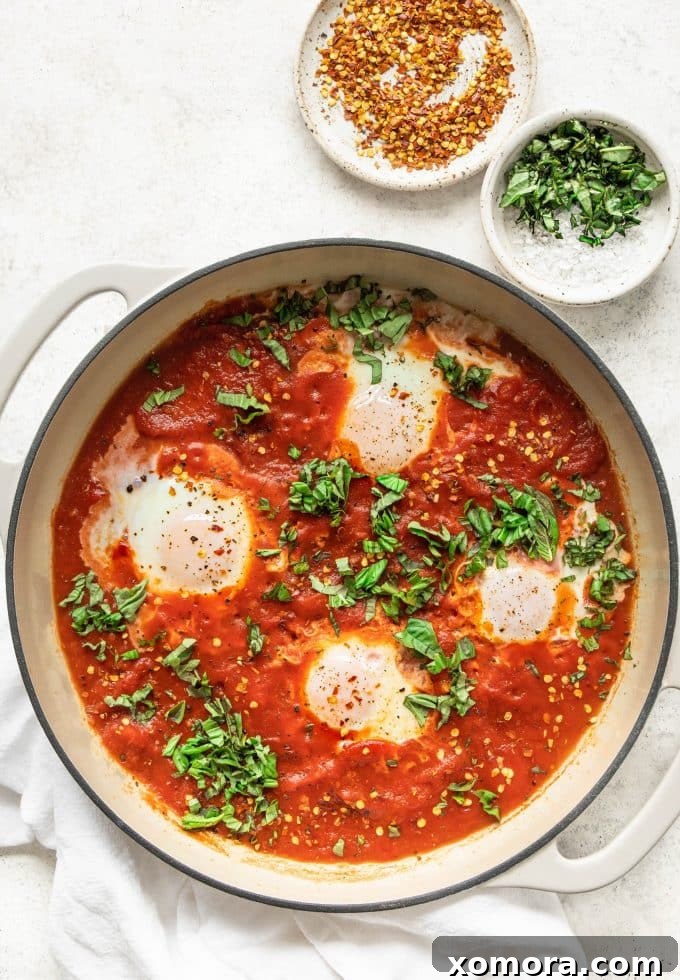
Originally published in 2018, this beloved recipe has been thoroughly refreshed with new photos and expanded details to bring you the ultimate guide to homemade Shakshuka. We’ve enhanced the content to ensure it’s even more user-friendly, SEO-optimized, and brimming with helpful insights.
Easy Shakshuka Recipe: Eggs Poached in Rich, Flavorful Tomato Sauce
Are you ready to transform your breakfast or dinner routine into an exciting culinary journey? Look no further than Shakshuka! This vibrant, savory dish, featuring perfectly poached eggs nestled in a rich, spiced tomato sauce, is a true showstopper that’s surprisingly simple to make. Forget bland beginnings; this easy Shakshuka recipe promises a burst of flavors and a delightful experience that will leave you craving more.
Often hailed as a healthy and satisfying meal, Shakshuka is much more than just eggs in tomato sauce. It’s a versatile, hearty, and aromatic dish that caters to both the hurried cook and the passionate food enthusiast. Its bold flavors and comforting warmth make it an ideal choice for any time of day, whether you’re starting your morning with a nutritious boost or winding down with a delicious, simple dinner.
What is Shakshuka? A Beloved North African & Middle Eastern Delight
Shakshuka, pronounced “shak-SHOO-ka,” is a staple dish found across North Africa and the Middle East, particularly popular in countries like Tunisia, Libya, Egypt, and Israel. Its name, believed to mean “all mixed up” in Arabic, perfectly describes this harmonious blend of ingredients. At its heart, Shakshuka consists of eggs gently poached directly in a simmering sauce made from crushed or diced tomatoes, often combined with chili peppers, bell peppers, and onions, and aromatic spices like cumin and paprika.
While traditionally enjoyed as a robust breakfast or brunch dish, its hearty nature and satisfying flavors have cemented its place as an excellent choice for a quick lunch or a comforting weeknight dinner. Historically, Shakshuka is thought to have originated in the Ottoman Empire before spreading throughout the region, evolving with local ingredients and preferences. Today, it stands as a testament to the power of simple, fresh ingredients coming together to create something truly extraordinary. This dish isn’t just a meal; it’s a cultural experience, often shared directly from the pan with friends and family, scooped up with crusty bread to soak in every last drop of the delectable sauce.
Why You’ll Love This Simple Shakshuka Recipe
Many people find the idea of poaching eggs intimidating, and traditional Shakshuka might seem complex. However, I am here to tell you that this recipe is incredibly easy and approachable for home cooks of all skill levels. It looks impressive, making it ideal for entertaining, but it comes together with minimal fuss in just about 30 minutes from start to finish! Here’s why this particular Shakshuka will become a regular in your rotation:
- Effortless Elegance: Despite its gourmet appearance, this dish requires only basic cooking techniques and readily available ingredients. No fancy equipment or culinary school training needed!
- Speedy Preparation: From chopping to serving, you can have a warm, fulfilling, and satisfying meal on the table in half an hour. This makes it perfect for busy mornings, quick lunches, or a hassle-free weeknight dinner.
- One-Pan Wonder: The majority of the cooking takes place in a single skillet, which significantly reduces cleanup time. Spend less time washing dishes and more time savoring your delicious creation.
- Customizable Flavors: This recipe provides a fantastic base, but it’s incredibly versatile. Easily adjust the spice level to your preference, add extra vegetables, or incorporate different herbs to make it uniquely yours. It’s a recipe that grows with your tastes.
- Healthy & Wholesome: Packed with nutrient-rich tomatoes, protein-filled eggs, and fresh aromatics, Shakshuka is a meal that nourishes your body and soul. It’s a guilt-free indulgence that leaves you feeling satisfied and energized.
Essential Ingredients for the Perfect Shakshuka
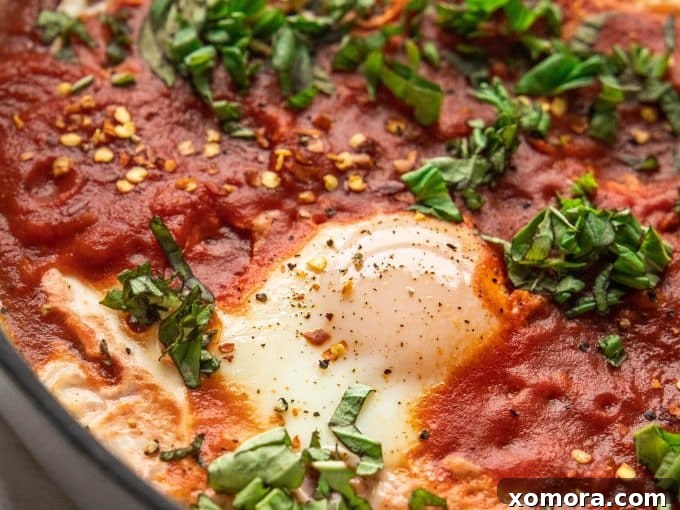
Creating an authentic and incredibly delicious Shakshuka starts with a thoughtful selection of fresh, high-quality ingredients. While the full list with precise measurements can be found in the recipe card below, here’s a detailed look at the key components that give this dish its incredible depth and irresistible flavor:
- Extra Virgin Olive Oil: This provides the foundational fat for sautéing our aromatics, adding a rich, smooth, and slightly fruity undertone that is characteristic of Mediterranean cooking.
- Onion: Diced white or yellow onion is slowly sautéed until soft and beautifully translucent. This step is crucial for laying down the first layer of savory sweetness and aromatic complexity for the sauce.
- Minced Garlic: Freshly minced garlic is non-negotiable for that unmistakable pungent fragrance and deep flavor that garlic and onion provide when cooked together. It’s the backbone of the sauce’s aroma.
- Canned Crushed Tomatoes: The heart and soul of the Shakshuka sauce! We highly recommend using fire-roasted crushed tomatoes for an added layer of smoky depth that truly elevates the entire dish. A 28 oz can provides the perfect amount of luscious tomato base for four generous servings.
- Coconut Aminos (or Low Sodium Soy Sauce): This is a secret ingredient that helps to perfectly balance the acidity of the tomatoes and adds a subtle yet profound umami flavor without making the dish overtly sweet. It’s a fantastic soy-free, gluten-free alternative to traditional soy sauce.
- Simple, Flavorful Seasonings:
- Salt & Pepper: These fundamental seasonings are essential for enhancing and bringing out all the other vibrant flavors in the dish.
- Paprika: Crucial for its warm, earthy, slightly sweet flavor, and for imparting that signature vibrant reddish-orange color to the Shakshuka sauce.
- Ground Cumin: Adds an earthy, robust, and slightly musky flavor that is deeply characteristic of Middle Eastern and North African cuisine.
- Crushed Red Pepper Flakes: These provide a gentle warmth and a customizable hint of spiciness. Feel free to adjust the quantity to suit your personal heat preference!
- Fresh Eggs: Using fresh, large eggs is paramount for achieving perfectly poached results. The recipe calls for 4, but you can easily use 6 if you desire a more egg-centric meal. The magic lies in the firm, tender whites and gloriously runny yolks that blend into the sauce.
- Fresh Herbs: A generous sprinkle of freshly chopped parsley or basil at the very end brightens the dish with a burst of fresh aroma, vibrant color, and a final layer of herbaceous flavor.
- Optional Toppings: Crumbled feta cheese (if you are not dairy-free) adds a fantastic salty, tangy, and creamy counterpoint to the rich tomato sauce. For those who love extra heat, a dash of your favorite hot sauce can be drizzled on top just before serving.
Step-by-Step Guide to Crafting Your Perfect Shakshuka
This recipe transforms humble ingredients into a spectacular meal with just a few straightforward steps. Follow these detailed instructions to create a rich, comforting, and perfectly balanced Shakshuka in your own kitchen:
- Sauté the Aromatics: Begin by heating one tablespoon of extra virgin olive oil in a large, sturdy skillet or cast-iron pan (preferably 10-12 inches) over medium heat. Add the diced onion and sauté for about 3 to 5 minutes, stirring occasionally, until the onion softens and becomes beautifully translucent. This initial step is absolutely crucial for building a deeply flavorful foundation for your sauce.
- Introduce the Garlic: Once the onions are ready, add the two teaspoons of minced garlic to the pan. Stir frequently for about 2 minutes. It’s important to watch the garlic carefully during this stage, as it can burn quickly and turn bitter. You’re aiming for a fragrant, light golden color, not brown. At this point, your kitchen should be smelling absolutely divine – there’s truly no better aroma than garlic and onion sizzling in olive oil!
- Build the Flavorful Sauce: Now, it’s time to bring in the main components of your delicious sauce. Pour in the 28 oz can of crushed tomatoes (opt for fire-roasted if available for an extra layer of smoky flavor!). Add the one tablespoon of coconut aminos, half a teaspoon of salt, half a teaspoon of paprika, half a teaspoon of ground cumin, a quarter teaspoon of pepper, and a quarter teaspoon of crushed red pepper flakes. Stir everything thoroughly to ensure all the seasonings are evenly distributed and fully mixed into the crushed tomatoes. Bring the sauce to a gentle simmer and let it cook uncovered for 5 minutes over medium heat. This simmering period allows all the flavors to meld, deepen, and concentrate beautifully.
- Taste and Adjust: Before proceeding to add the eggs, take a moment to taste your simmering sauce. This is your prime opportunity to adjust the seasonings to your personal preference. If you find it needs more salt, a little extra kick from pepper, or even a touch more paprika to enhance its warmth, now is the perfect time to add it. Achieving the right balance of flavors here is key.
- Create Wells for Eggs: Using the back of a spoon or a spatula, carefully create four distinct wells or indentations in the hot, simmering tomato sauce. These will serve as the cozy, individual nests for your eggs, ensuring they poach evenly without running into each other too much.
- Gently Poach the Eggs: Carefully crack one egg into each well, taking care to keep the yolks intact. Once all four eggs are in place, reduce the heat to medium-low. Cover the skillet tightly with a lid. Allow the eggs to gently poach in the tomato sauce until the whites are fully set and opaque, but the yolks remain wonderfully soft, luscious, and runny. This typically takes about 8 to 12 minutes. The “sweet spot” is often around 10 minutes for perfectly runny yolks, but cooking times can vary slightly based on your specific stove, the type of pan you’re using, and how securely the lid fits. Keep a watchful eye on them to achieve your desired level of doneness.
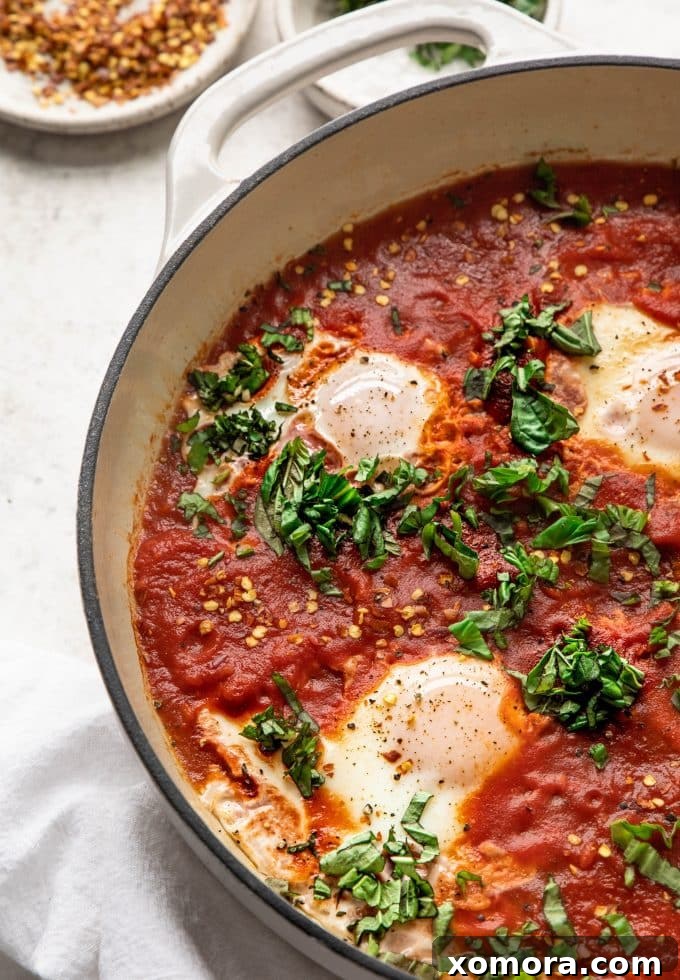
- Garnish and Serve: Once your eggs are perfectly poached to your liking, remove the pan from the heat. Generously sprinkle the entire dish with fresh chopped parsley or basil. If you’re not dairy-free, a scattering of crumbled feta cheese adds a fantastic salty and creamy counterpoint that elevates the flavors even further. Serve immediately, spooning the eggs and rich sauce directly over your choice of accompaniment for a truly filling, satisfying, and unforgettable meal!
Shakshuka FAQs: Your Questions Answered
What Exactly Are Coconut Aminos and Why Use Them?
Coconut aminos are a highly popular and healthy substitute for traditional soy sauce, widely embraced in gluten-free and soy-free diets. They are derived from the nutrient-rich sap of coconut blossoms, which is fermented and then blended with sea salt. Despite the name, coconut aminos do not taste like coconut at all! Instead, they offer a similar savory, slightly sweet, and distinct umami flavor profile to soy sauce, making them an excellent alternative for those with dietary restrictions or individuals looking to reduce their sodium intake. They contain significantly less sodium than regular soy sauce and are also naturally gluten-free and soy-free.
In this Shakshuka recipe, a tablespoon of coconut aminos plays a crucial role in balancing the natural acidity of the tomatoes. It introduces a subtle sweetness and a profound depth of umami flavor that rounds out the sauce beautifully without making the dish overtly sweet. If you don’t have coconut aminos on hand, a low-sodium soy sauce can be used as a substitute, but the coconut aminos offer a unique, milder sweetness and complexity that truly complements the robust tomato base.
How Spicy is Traditional Shakshuka?
The spice level in Shakshuka can vary significantly depending on the region of origin and, of course, personal preference. This particular recipe is designed to be flavorful and warmly spiced, but not overwhelmingly hot, making it enjoyable for most palates. It achieves a mild warmth courtesy of the paprika’s gentle heat and a subtle kick from the crushed red pepper flakes. This balance allows the rich tomato and aromatic flavors to shine through.
If you prefer your Shakshuka extra mild or are serving it to children or those sensitive to spice, you can easily omit the crushed red pepper flakes entirely. For adventurous eaters or those who love a fiery kick, feel free to ramp up the heat! You can do this by adding an extra dash or two of crushed red pepper flakes, incorporating a finely chopped fresh chili (like a jalapeño or serrano) with the onions, or drizzling your favorite hot sauce directly into the simmering tomato sauce. Experiment to find your perfect balance of warmth and spice!
Understanding Poached Eggs in Shakshuka
When we refer to “poached eggs” in the context of Shakshuka, it’s a slightly different and often simpler method than traditionally poaching eggs in a separate pot of simmering water. In Shakshuka, the eggs are cracked directly into the hot, bubbling tomato sauce and then gently cooked, covered, until they reach perfection. The goal is to achieve whites that are fully set, opaque, and tender, while the yolks remain wonderfully soft, luscious, and gloriously runny. This method allows the eggs to infuse with the rich, aromatic flavors of the tomato sauce as they cook.
The runny yolk is a absolutely crucial element of an authentic Shakshuka experience. When you break into the yolk, it spills out and beautifully mixes with the spiced tomato sauce, creating a creamy, luxurious richness that brings the entire dish together. This textural contrast between the firm egg white, liquid yolk, and robust sauce is what makes Shakshuka so uniquely satisfying. It’s a culinary delight that highlights the simple elegance of perfectly cooked eggs.
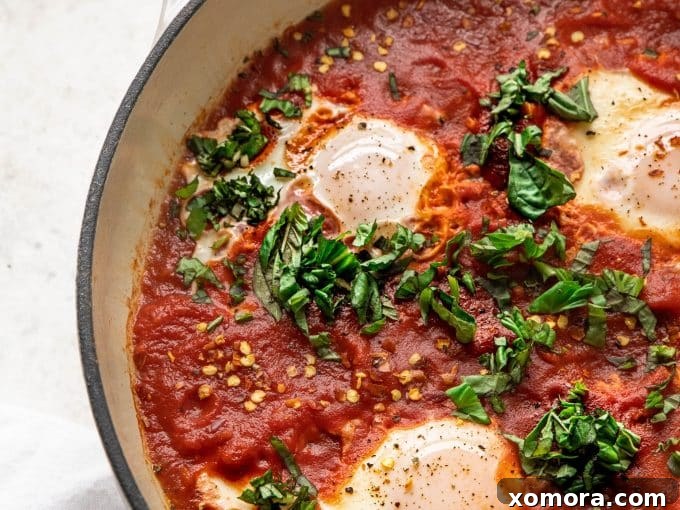
Creative Ways to Serve Your Shakshuka
One of the many beauties of Shakshuka is its incredible versatility when it comes to serving. While it’s utterly delicious on its own, here are some popular and delightful ways to enjoy your homemade creation, ensuring every last drop of that flavorful sauce is savored:
- Crusty Bread or Toast: This is arguably the most classic and satisfying pairing. A warm slice of buttered toast, a thick piece of crusty sourdough, a freshly baked baguette, or even soft pita bread is absolutely perfect for dipping and soaking up every last bit of the flavorful tomato sauce and runny yolk. The bread acts as an edible spoon!
- Sautéed Potatoes or Roasted Veggies: For a heartier and more substantial meal, consider serving your Shakshuka alongside perfectly sautéed cubed potatoes or a colorful medley of roasted vegetables. Bell peppers, zucchini, eggplant, or sweet potatoes all make excellent companions, adding extra texture and nutrients.
- Rice or Quinoa: A bed of fluffy rice or protein-rich quinoa can transform Shakshuka into a more filling lunch or dinner, especially for those seeking a gluten-free grain option. The grains beautifully absorb the rich flavors of the sauce.
- With a Side Salad: A simple, fresh green salad dressed with a light vinaigrette offers a refreshing contrast to the warm, rich, and robust flavors of the Shakshuka. It adds a welcome element of freshness and crunch.
- Couscous: In North African culinary traditions, serving Shakshuka with a side of steamed couscous is also a common practice. The tiny granules of couscous provide another delightful texture and are excellent for soaking up the flavorful sauce.
- Tortillas or Naan: For a fusion twist, try serving Shakshuka with warm corn or flour tortillas, or soft naan bread for scooping.
Shakshuka Variations and Expert Tips for Success
While the classic Shakshuka is fantastic in its traditional form, don’t hesitate to get creative in the kitchen! This dish is incredibly forgiving and open to a wide array of delicious additions and customizations. Here are some ideas to inspire you, along with essential tips for ensuring your Shakshuka turns out perfectly every single time:
Delicious Variations to Try:
- Add More Veggies: Sauté sliced bell peppers (red, yellow, or green) alongside the onions for extra color, sweetness, and depth. Leafy greens like fresh spinach or chopped kale can be wilted into the sauce just a few minutes before adding the eggs for an extra boost of nutrients and vibrant color.
- Cheesy Twist: Beyond the classic feta, consider sprinkling some shredded mozzarella, creamy goat cheese, or even a hard grating cheese like Parmesan on top before covering to poach the eggs. The melting cheese adds a decadent, creamy layer that complements the sauce beautifully.
- Hearty Protein Additions: For a more substantial and protein-packed meal, brown some ground lamb, beef, or turkey with the onions and garlic before adding the tomatoes. Pre-cooked chicken sausage, chorizo, or even chickpeas (added with the tomatoes) can also be wonderful additions.
- Herb Variations: While parsley and basil are classic choices, fresh cilantro can also add a delightful, bright, and slightly zesty flavor profile to your Shakshuka. Experiment with different combinations to find your favorite!
- Smoky Enhancements: For an even deeper, richer flavor, a pinch of smoked paprika (in addition to regular paprika) or a very tiny drop of liquid smoke can further enhance the fire-roasted tomato flavor profile, giving it an extra layer of complexity.
Tips for Shakshuka Perfection:
- Use a Wide, Heavy Skillet: A large, shallow pan (such as a 10-12 inch cast iron or heavy-bottomed stainless steel skillet) is ideal. It ensures that the sauce cooks evenly and provides enough surface area for the eggs without overcrowding, allowing them to poach properly.
- Don’t Overcrowd the Pan: While the recipe is adaptable for 4 to 6 eggs, ensure there’s enough individual space for each egg to cook properly without merging into its neighbors. Overcrowding can lead to uneven cooking.
- Fresh Eggs Make a Difference: Fresher eggs tend to hold their shape better when cracked directly into the sauce. This results in more aesthetically pleasing and perfectly formed poached eggs with defined whites and yolks.
- Adjust Heat Carefully: It’s crucial to maintain a gentle simmer for the sauce during the egg poaching process. Too high heat can cause the eggs to cook too quickly on the bottom and potentially stick to the pan, while heat that is too low might not set the whites properly.
- Monitor Egg Doneness: Different people prefer different levels of yolk runniness. Begin checking the eggs a minute or two before the suggested cooking time to ensure they reach your desired consistency – from barely set to slightly firmer yolks.
- Season in Layers: Taste and adjust seasonings not just at the end, but also after the sauce has simmered for a few minutes. This allows you to build and perfect the flavor profile as you go.
Health Benefits of Shakshuka
Beyond its incredible taste and remarkable ease of preparation, Shakshuka is also a remarkably healthy and nutritionally dense meal. It’s packed with beneficial nutrients, making it a fantastic choice for any time of day, supporting a balanced and wholesome diet:
- Rich in Antioxidants: Tomatoes, the star ingredient of Shakshuka, are a powerhouse of lycopene, a potent antioxidant known for its extensive health benefits, particularly for heart health and its protective effects against certain types of cancer. Interestingly, cooking tomatoes, as done in Shakshuka, actually increases the bioavailability of lycopene, making it easier for your body to absorb.
- Excellent Source of Protein: Eggs are considered a complete protein source, providing all nine essential amino acids that your body cannot produce on its own. They contribute significantly to satiety, helping you feel fuller for longer, and are vital for muscle repair, growth, and overall bodily function.
- Abundant in Vitamins and Minerals: Eggs are exceptionally rich in essential vitamins such as Vitamin D, Vitamin B12, and Vitamin A, as well as crucial minerals like selenium and choline, which is vital for brain health and cognitive function. The fresh vegetables in the sauce, like onions and garlic, further contribute a spectrum of vitamins, minerals, and beneficial plant compounds.
- Fiber-Rich: The generous tomato base, especially when combined with any added vegetables, provides a good amount of dietary fiber. Fiber is essential for maintaining a healthy digestive system, regulating bowel movements, and helping to stabilize blood sugar levels, contributing to sustained energy.
- Naturally Gluten-Free: Shakshuka itself is inherently gluten-free, making it an excellent and flavorful option for individuals with gluten sensitivities, celiac disease, or those choosing to avoid gluten in their diet, especially when served with gluten-free accompaniments.
- Low in Calories, High in Nutrients: This dish offers a high nutrient-to-calorie ratio, providing substantial nutrition without excessive calories, making it a great choice for weight management and overall wellness.
Storing and Reheating Your Shakshuka
While Shakshuka is undoubtedly best enjoyed fresh, particularly with those perfectly runny yolks, you can certainly prepare parts of it ahead of time or store leftovers. The sauce itself is quite freezer-friendly, allowing you to whip up a quick meal even faster on a busy day when you have a craving.
- Making the Sauce Ahead: You can prepare the flavorful tomato sauce entirely, let it cool completely, and then store it in an airtight container in the refrigerator for up to 3-4 days. For longer storage, the sauce freezes beautifully for up to 3 months. When you’re ready to serve, simply thaw the frozen sauce (if applicable), reheat it gently in a skillet over medium-low heat, and then proceed with creating the wells and poaching fresh eggs directly in the reheated sauce.
- Storing Leftovers (with eggs): Leftover Shakshuka that already contains cooked eggs can be stored in an airtight container in the refrigerator for 1-2 days. It’s important to note that upon reheating, the egg yolks will likely no longer be runny, and the whites may become slightly firmer.
- Reheating Leftovers: To reheat leftover Shakshuka with eggs, gently warm it on the stove over low heat. If the sauce has thickened significantly, you can add a small splash of water or vegetable broth to loosen it up. Alternatively, individual portions can be reheated in the microwave. Keep in mind that the eggs will continue to cook during the reheating process, so expect firmer yolks, but the dish will still be delicious and comforting.
More Delicious Breakfast & Brunch Recipes You’ll Love
If you’re a fan of savory, wholesome, and easy-to-make breakfast and brunch options, be sure to explore these other fantastic recipes from our collection. They are perfect for adding variety to your morning meals or for entertaining guests!
- Chicken Sausage Breakfast Hash
- Dairy Free Chicken Sausage Breakfast Casserole
- Spinach & Arugula Breakfast Hash

Shakshuka (Eggs Poached in Tomato Sauce)
Christina
5
25
30
4 servings
Pin Recipe
Leave a Comment
Ingredients
- 1 tbsp olive oil, extra virgin
- 1/4 white or yellow onion, diced
- 2 tsp garlic, minced
- 28 oz canned crushed tomatoes, Fire roasted is best.
- 1 tbsp coconut aminos
- 1/2 tsp salt
- 1/2 tsp paprika
- 1/2 tsp ground cumin
- 1/4 tsp pepper
- 1/4 tsp crushed red pepper flakes
- 4 eggs, Can use 6 if you’d like.
- chopped fresh parsley or basil
Optional Additions:
- Crumbled feta cheese (if not dairy-free)
- A dash of hot sauce for extra heat
Instructions
-
On the stove, heat 1 tbsp olive oil in a large skillet over medium heat. Add the diced onion and sauté until softened and translucent, about 3 to 5 minutes.
-
Add 2 tsp minced garlic to the pan. Stir frequently for about 2 minutes, until the garlic is fragrant and lightly golden. Be careful not to burn it.
-
Add the 28 oz can of crushed tomatoes, 1 tbsp coconut aminos, 1/2 tsp salt, 1/2 tsp paprika, 1/2 tsp ground cumin, 1/4 tsp pepper, and 1/4 tsp crushed red pepper flakes to the pan. Stir well to combine all seasonings with the tomatoes. Bring to a gentle simmer and cook for 5 minutes over medium heat, allowing flavors to deepen.
-
Taste the sauce and adjust seasonings if necessary, adding more salt, pepper, or spices to your preference.
-
Using the back of a spoon or spatula, create 4 wells (holes) in the simmering sauce. Carefully crack one egg into each well.
-
Reduce heat to medium-low. Cover the skillet tightly. Let the eggs poach in the tomato sauce until the whites are set and opaque, but the yolks are still runny. This typically takes 8 to 12 minutes, with 10 minutes often being ideal. Cooking time may vary based on your stove and pan.
-
Once cooked to your liking, remove from heat. Sprinkle with chopped fresh parsley or basil. Serve immediately, spooning the eggs and sauce over toast, sautéed potatoes, or roasted veggies for a delicious and filling meal!
Notes
Nutrition Information
Serving: 1 egg + sauce
- Calories: 170kcal
- Carbohydrates: 17g
- Protein: 9g
- Fat: 8g
- Saturated Fat: 1g
- Cholesterol: 163mg
- Sodium: 708mg
- Potassium: 662mg
- Fiber: 4g
- Sugar: 9g
- Vitamin A: 800IU
- Vitamin C: 19.7mg
- Calcium: 98mg
- Iron: 3.4mg
Nutrition information is automatically calculated, so should only be used as an approximation.
We hope you love this easy Shakshuka recipe as much as we do! If you tried it, please consider leaving a comment below to share your experience, tips, or variations. Your feedback is greatly appreciated and helps other home cooks!