
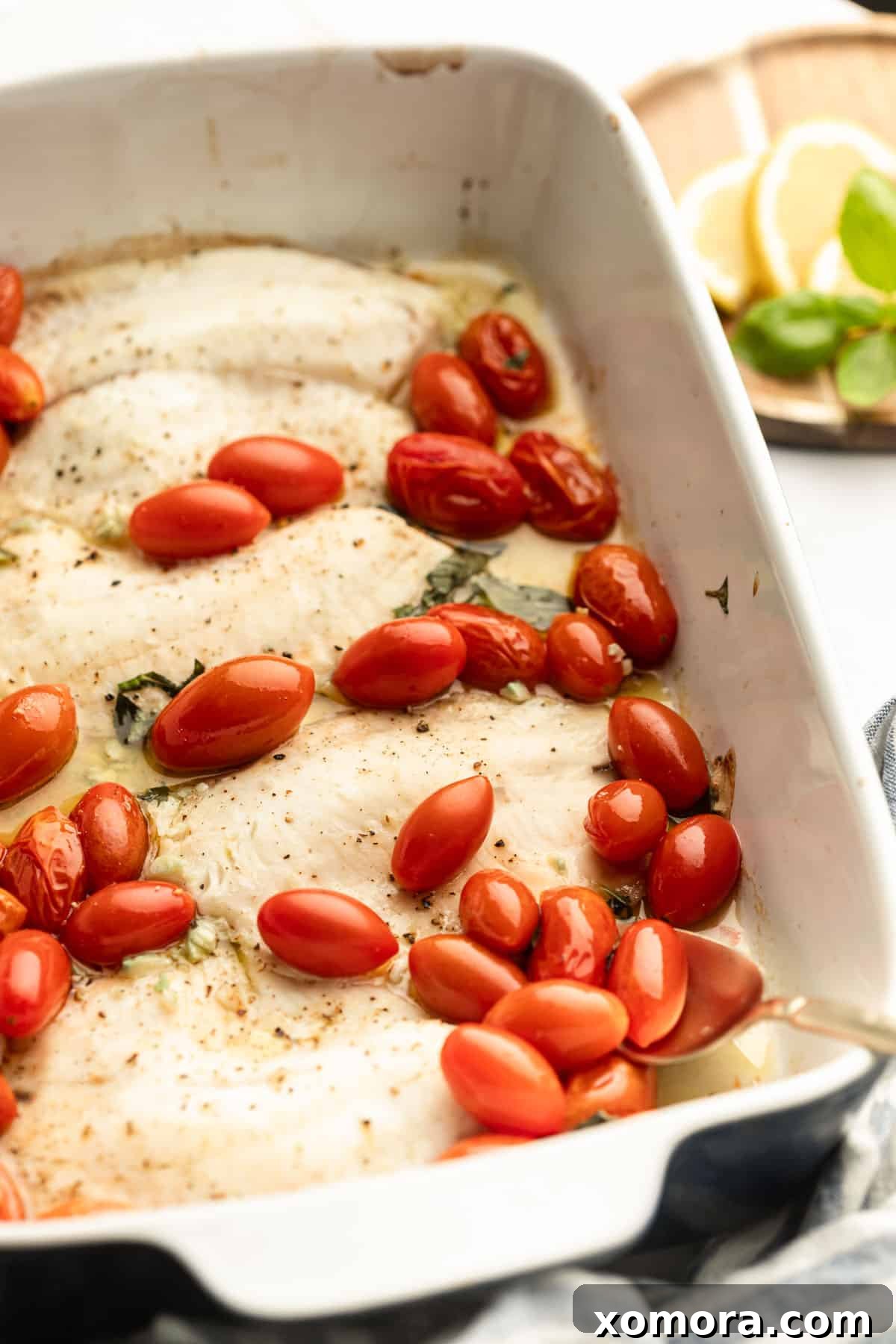
Transform your dinner routine with this incredibly simple yet elegant Baked Flounder recipe. In just 15 minutes, you can have a light, flaky, and perfectly lemony seafood entree on your table that tastes like it came from a gourmet restaurant, without the hefty price tag or complicated prep. This dish is a testament to how effortlessly delicious healthy eating can be, making it an ideal choice for busy weeknights or a special, quick meal.
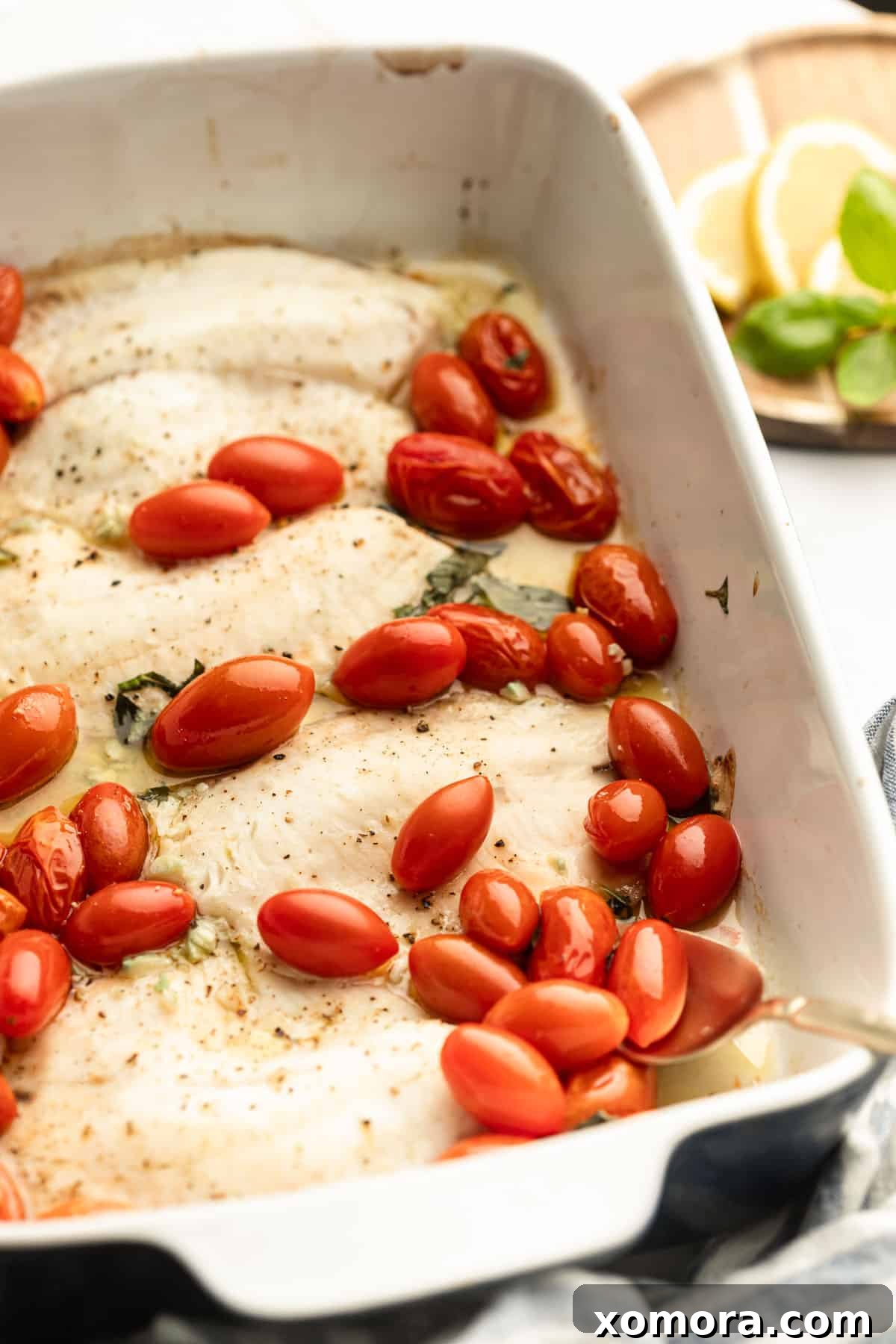
If you adore quick and healthy seafood, this Tomato Lemon Baked Flounder will quickly become a cherished favorite. Its exceptionally mild flavor makes it universally appealing, even to those who typically shy away from fish. The preparation couldn’t be easier – simply arrange all the ingredients in a single baking dish, and let your oven do the work. The result is a beautifully cooked, moist fish that flakes apart effortlessly, infused with the vibrant flavors of lemon, garlic, and fresh basil, complemented by bursts of sweet grape tomatoes. It’s a culinary experience that combines convenience with sophisticated taste.
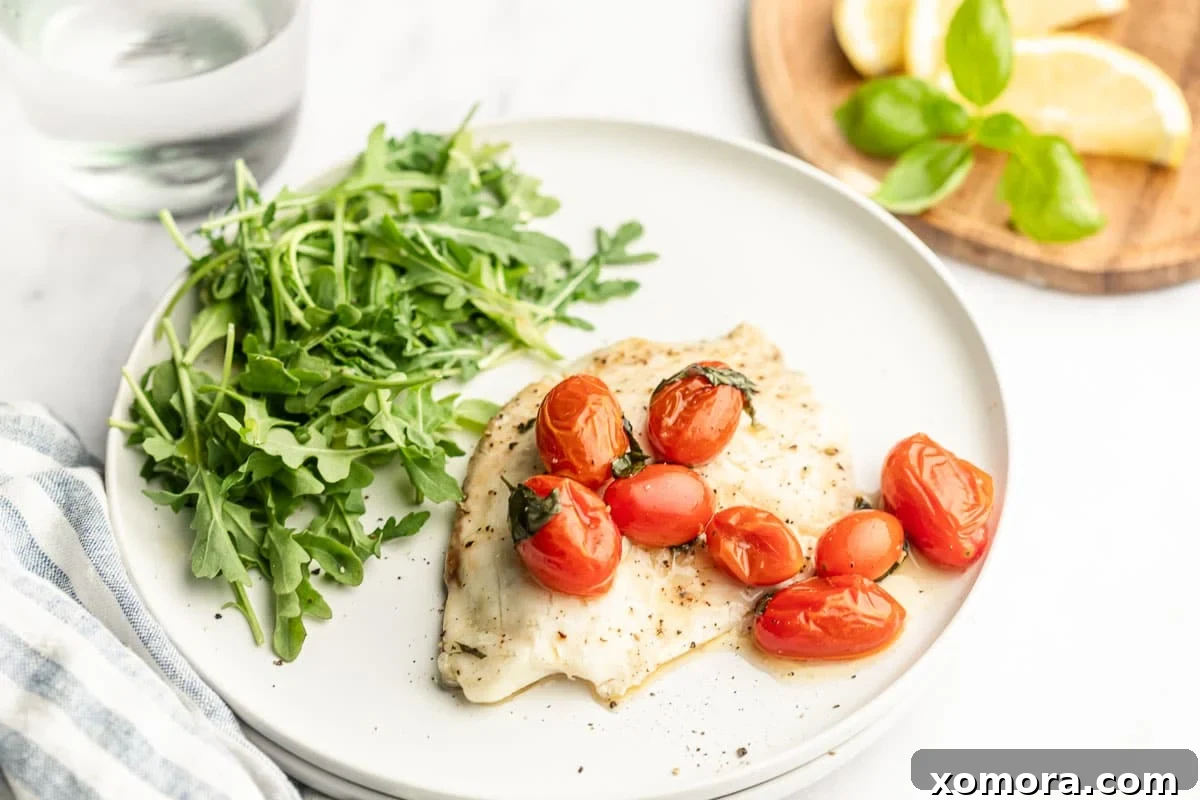
This versatile dish pairs wonderfully with a variety of sides. Imagine it alongside fluffy rice, such as a lemon herb or jasmine rice, to soak up all the delicious pan juices. A crisp, simple side salad provides a refreshing counterpoint, adding a delightful crunch and extra nutrients. Together, they create a balanced and satisfying meal that’s both light and fulfilling. This recipe not only promises a delectable entree but also a stress-free cooking experience, proving that gourmet flavors are achievable even on your busiest days.
Ingredients for Your Flavorful Baked Flounder
One of the best aspects of this recipe is its straightforward ingredient list, featuring fresh, wholesome components that are easy to find and bring out the best in the flounder. Here’s what you’ll need to create this bright and healthy dish:
- Flounder Fillets: The star of our dish, chosen for its delicate texture and mild taste. We recommend 4-ounce fillets for quick cooking, but 6-ounce fillets can be used with a slight increase in baking time. Fresh or frozen (thawed) fillets work beautifully.
- Olive Oil (Extra Virgin): A healthy fat that helps prevent the fish from sticking, adds a rich, subtle flavor, and facilitates the even cooking of the ingredients. Its fruity notes complement the lemon and basil.
- Minced Garlic: Fresh garlic is key here, infusing the dish with its aromatic and pungent essence, enhancing the overall savory profile.
- Lemon Juice: The cornerstone of the dish’s bright and fresh flavor. Freshly squeezed lemon juice is always preferred for its vibrant acidity that cuts through the richness and tenderizes the fish.
- Grape Tomatoes: These small, sweet tomatoes burst during baking, releasing their juicy sweetness and adding a lovely pop of color and freshness to the dish. They caramelize slightly, offering a delightful contrast.
- Fresh Basil: Stirred in after baking, fresh basil provides a fragrant, sweet, and peppery aroma that ties all the flavors together, giving the dish a Mediterranean feel.
- Salt and Pepper: Essential seasonings to enhance the natural flavors of the flounder and vegetables. Adjust to your taste preferences.
These simple ingredients combine to create a symphony of flavors that is both comforting and invigorating, making this baked flounder a truly exceptional meal.
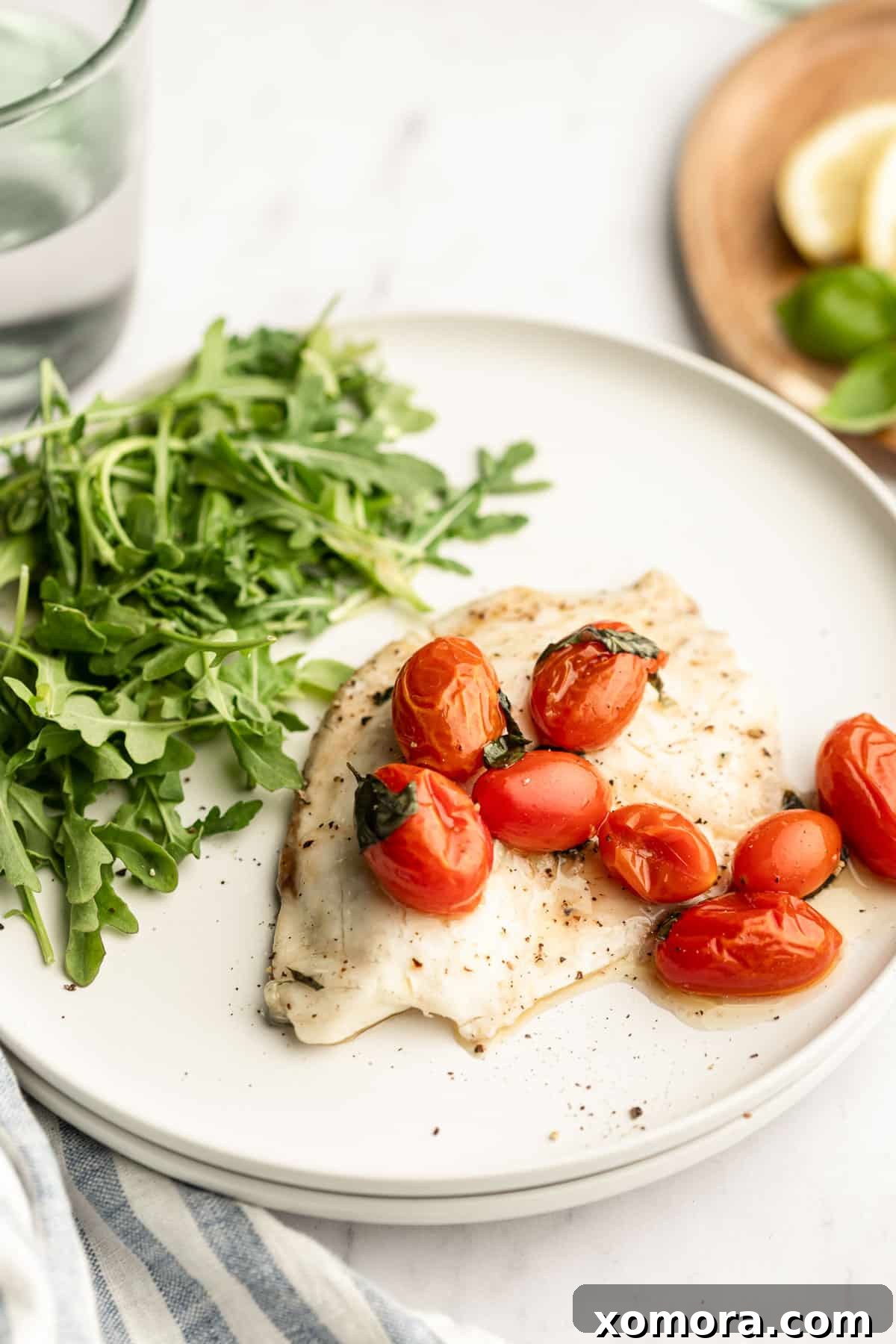
Understanding Flounder: A Delightful White Fish
Flounder is a popular flatfish celebrated for its delicate texture and remarkably mild flavor. Belonging to the Pleuronectidae family, flounder species are found in various oceans around the world, making them a widely available and sustainable seafood choice. Its flesh is white, lean, and incredibly tender when cooked, flaking easily with a fork.
What sets flounder apart is its incredibly subtle, non-fishy taste. This characteristic makes it an excellent gateway fish for those who are new to seafood or for individuals who prefer milder flavors. It’s often a big hit with children and picky eaters who might otherwise be apprehensive about eating fish. Its versatility allows it to absorb the flavors of marinades, herbs, and spices beautifully, making it perfect for this lemon-infused recipe. Furthermore, flounder is a fantastic source of lean protein, essential vitamins, and minerals, contributing to a healthy diet without adding excessive calories or saturated fats.
Ensuring Perfect Flounder: How to Tell When It’s Done
Achieving perfectly cooked flounder is crucial for both flavor and texture. Overcooked fish can become dry and rubbery, while undercooked fish is unappetizing and potentially unsafe. Fortunately, flounder cooks relatively quickly, and there are clear indicators to look for.
Properly cooked flounder should be opaque and white throughout. The most reliable test is the “fork test”: gently insert a fork into the thickest part of the fillet and twist. If the fish flakes easily, separating into distinct layers, it’s done. Another reliable method is to use an instant-read meat thermometer. The internal temperature of cooked fish should reach 145°F (63°C). Because flounder fillets are thin, they cook rapidly, often between 12-20 minutes depending on thickness. Keeping a close eye on your fish and checking for doneness at the lower end of the cooking range will help prevent overcooking and ensure a moist, tender result every time.
Fish Substitutions: Exploring Other White Fish Options
While flounder is an excellent choice for this recipe, its mild flavor and delicate texture can be beautifully replicated with other white fish varieties. If flounder isn’t available or if you simply wish to experiment, many alternatives will work wonderfully, maintaining the light and healthy essence of the dish.
Excellent substitutes include:
- Tilapia: A very mild, widely available, and affordable white fish with a firm yet flaky texture. It absorbs flavors well.
- Mahi-Mahi: Known for its firm, sweet flesh and large flakes, mahi-mahi holds up well to baking and offers a slightly richer flavor than flounder.
- Halibut: A premium white fish with a firm, meaty texture and sweet, mild flavor. It’s thicker, so adjust cooking time accordingly.
- Cod: Another popular choice, cod offers a mild flavor and flaky texture. It’s forgiving and readily available, making it a reliable alternative.
- Haddock: Similar to cod, haddock is a lean white fish with a slightly firmer texture and a delicate, sweet flavor.
- Sole: Often confused with flounder (and sometimes used interchangeably in markets), sole has a very similar delicate texture and mild flavor profile, making it a perfect stand-in.
When substituting, always consider the thickness of the fillet, as this will impact cooking time. Thicker cuts may require a few extra minutes in the oven, so always rely on visual cues and the fork test to ensure perfect doneness. Regardless of your choice, the lemon, garlic, and tomato flavors will shine through, creating a delicious seafood meal.
Storing and Reheating Your Baked Flounder
This baked flounder is best enjoyed fresh, but leftovers can be a convenient and delicious option for another meal. Proper storage ensures the fish remains safe and maintains its quality.
Refrigeration: Allow any leftover flounder to cool completely before transferring it to an airtight container. It can be safely refrigerated for up to 3 days. Storing it properly helps to prevent odors from spreading in your fridge and keeps the fish fresh.
Freezing: For longer storage, you can freeze baked flounder for up to 4 months. Place the cooled fillets in a freezer-safe bag or airtight container, removing as much air as possible to prevent freezer burn. Thaw frozen fish overnight in the refrigerator before reheating.
Reheating: To reheat, gently warm the flounder in an oven preheated to 275-300°F (135-150°C) for about 10-15 minutes, or until just heated through. Reheating slowly at a lower temperature helps prevent the fish from drying out. You can also microwave it briefly, though this method can sometimes alter the texture. A quick pan-sear with a little olive oil on medium-low heat can also work, crisping up the exterior slightly while warming the interior.
Versatile Serving Suggestions
This Tomato Lemon Baked Flounder is incredibly versatile and can be served with a wide array of side dishes to create a complete and satisfying meal. Its light and fresh profile means it pairs well with many flavors and textures.
- Rice: A classic pairing. Consider serving it with fluffy jasmine rice, brown rice for added fiber, or even a flavorful lemon herb rice that complements the fish’s seasoning. The rice acts as a perfect vehicle to soak up all the delicious juices from the baking dish.
- Simple Side Salad: A fresh, crisp green salad provides a wonderful textural contrast and a refreshing element. Drizzle it with a light vinaigrette. Our Easy Homemade Italian Dressing would be a perfect vibrant addition, or for a more unique twist, try our Easy Kale Salad with Honey Lemon Dressing for a dose of greens and zesty flavor.
- Roasted Vegetables: Asparagus, broccoli, green beans, or zucchini roasted alongside the fish or separately make for a nutritious and easy side. Toss them with a little olive oil, salt, and pepper.
- Quinoa or Couscous: For a healthier grain alternative, quinoa or couscous infused with herbs and lemon zest can provide a satisfying base.
- Crusty Bread: A warm, crusty baguette is excellent for soaking up the flavorful pan juices.
- Potato Dishes: Light mashed potatoes, roasted new potatoes, or a simple potato salad could also complement the dish, especially for a heartier meal.
No matter how you choose to serve it, this baked flounder promises a delightful and effortlessly elegant dining experience.
Discover More Seafood Inspiration:
If you loved this easy baked flounder, you’ll be thrilled to explore our other fantastic seafood recipes. Each one is designed to be simple, delicious, and perfect for any occasion:
- Easy Baked Halibut with Vegetables: Another fantastic white fish recipe, baked to perfection with tender vegetables.
- Pistachio Herb Crusted Salmon with Asparagus: A wonderfully textured and flavorful salmon dish with a satisfying crunch.
- Tomato Basil Cod with Broccoli: Similar flavor profiles to our flounder, but with robust cod and healthy broccoli.
- Sheet Pan Lemon Herb Salmon & Veggies: The ultimate in convenience, a complete meal baked on one sheet pan.
- Pan Seared Chipotle Lime Salmon: For those who enjoy a little spice and zest, this pan-seared salmon is bursting with flavor.
- Sautéed Lemon Butter Mahi Mahi: A quick and luxurious dish featuring firm mahi-mahi in a delectable lemon butter sauce.
Expand your seafood repertoire with these easy-to-follow recipes, bringing healthy and delicious meals to your table.
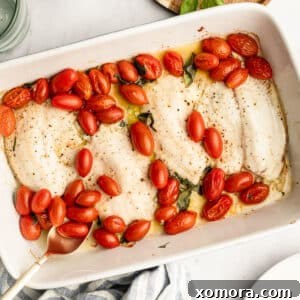
Tomato Lemon Baked Flounder
Ingredients
- 4 (4 oz) flounder fillets (can use 6 oz fillets, may increase cooking time)
- 2 tbsp extra virgin olive oil
- 1 tbsp minced garlic
- ½ tsp salt
- ¼ tsp black pepper
- 4 tsp lemon juice
- 1 pint grape tomatoes
- 8 fresh basil leaves
Instructions
- Preheat oven to 400°F (200°C).
- Spread 1 tablespoon of olive oil on the bottom of a baking dish. Arrange the fish in a single, even layer, ensuring the fillets are not touching. Season the fish generously with salt and pepper. Drizzle the lemon juice over the fillets, then add the remaining 1 tablespoon of olive oil on top. Distribute the minced garlic evenly between the fillets. Finally, scatter the grape tomatoes around the fish.
- Bake at 400°F (200°C) for 15 to 20 minutes, or until the fish flakes apart easily with a fork and is opaque throughout. Cooking time may vary based on fillet thickness.
- Once the fish is cooked, remove the dish from the oven and stir in the fresh basil leaves. The basil will wilt beautifully from the residual heat. Carefully spoon the fish with the tomatoes, garlic, and basil onto individual plates to serve immediately.
Nutrition
Serving: 1 fillet + tomatoes
Calories: 187 kcal
Carbohydrates: 6 g
Protein: 19 g
Fat: 10 g
Saturated Fat: 2 g
Polyunsaturated Fat: 1 g
Monounsaturated Fat: 6 g
Trans Fat: 1 g
Cholesterol: 64 mg
Sodium: 412 mg
Potassium: 524 mg
Fiber: 2 g
Sugar: 3 g
Vitamin A: 1076 IU
Vitamin C: 19 mg
Calcium: 48 mg
Iron: 1 mg
Nutrition information is automatically calculated, so it should only be used as an approximation.
Enjoyed this recipe? We’d love to hear from you! Leave a comment below and share your experience!