
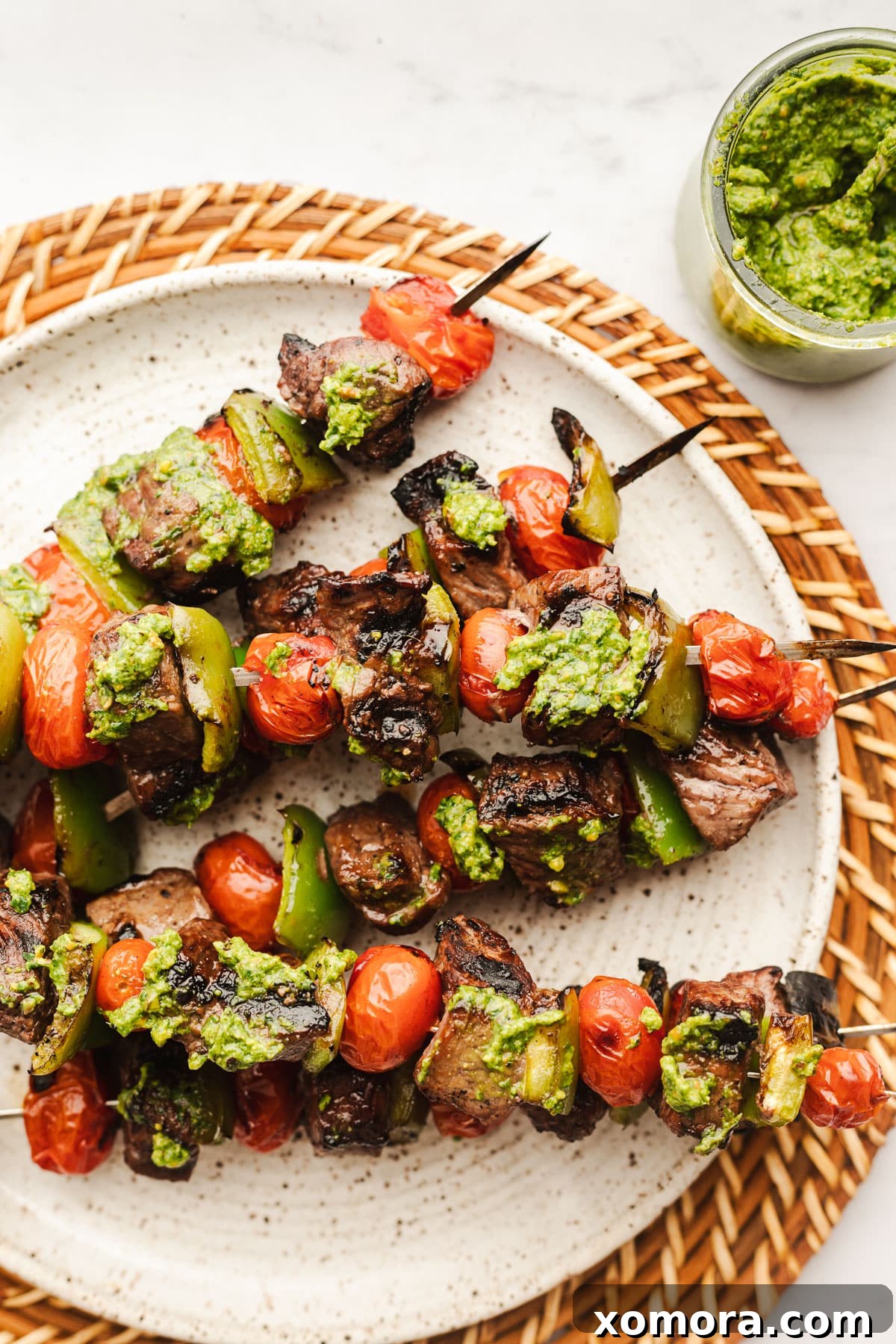
Transform your summer grilling with these irresistibly delicious Pesto Steak Kabobs! Featuring tender, marinated steak, perfectly blistered tomatoes, and vibrant bell peppers, all crowned with a fresh, homemade dairy-free pesto, this dish is guaranteed to impress. Whether you’re hosting a backyard barbecue or enjoying a quiet family dinner, these kabobs offer a gourmet experience that’s surprisingly simple to prepare and quick to cook.
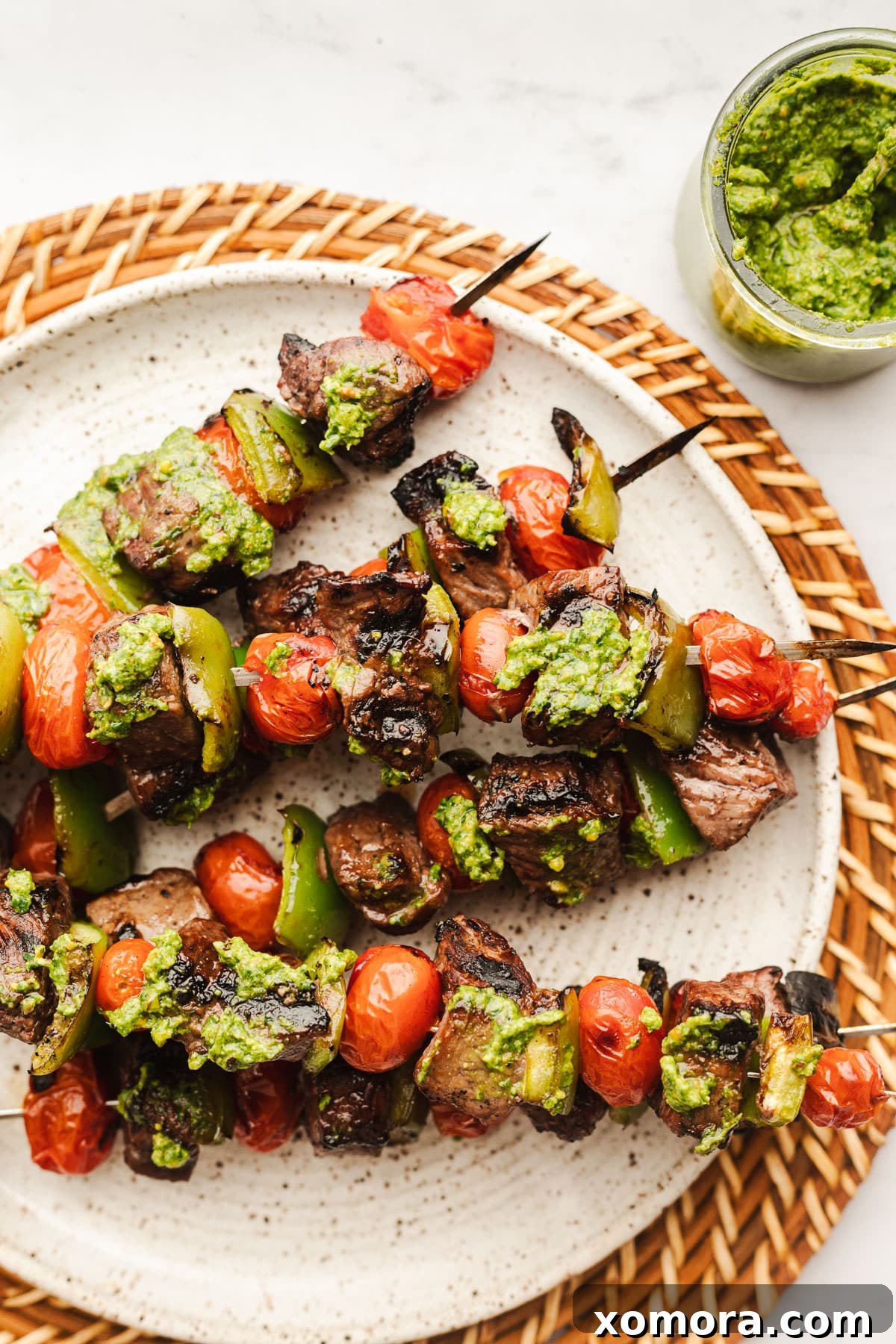
Originally shared in 2017, this beloved recipe has been refreshed and republished, highlighting our incredible dairy-free Pistachio Lemon Pesto. Get ready to discover why kabobs are the ultimate choice for healthy, flavorful, and visually stunning meals.
Why Kabobs Are Your Go-To for Easy Grilling
Kabobs truly shine as a fantastic option for healthy, quick, and satisfying meals. They cook remarkably fast, making them perfect for busy weeknights or impromptu gatherings. Despite their elegant presentation, they are surprisingly easy to assemble, giving the impression that you’ve put in a tremendous amount of effort. For those who might feel a bit intimidated by grilling steak directly, kabobs provide a stress-free pathway to achieving perfectly cooked, juicy meat every time. The magic often lies in a well-chosen marinade, which infuses every bite with incredible flavor.
Beyond the ease of preparation, kabobs also simplify cleanup – a huge bonus in any kitchen! What I personally love most is their aesthetic appeal. The vibrant colors of the ingredients, perfectly threaded onto skewers, make for a beautiful presentation that instantly elevates any dining experience, especially when entertaining guests. They’re effortlessly festive and simply my favorite method for grilling meats when I have company.
This particular pesto steak recipe is exceptionally fast because all its main components—steak, tomatoes, and bell peppers—are quick-cooking ingredients. This is a crucial element to successful kabobs; a common mistake is combining ingredients that require vastly different cooking times, which can lead to some items being overcooked while others remain underdone. With this recipe, you won’t encounter that issue. Our carefully selected ingredients ensure harmonious cooking, resulting in perfectly tender steak and beautifully blistered vegetables.
The Star Ingredients: Steak, Veggies & Our Signature Pesto
For these kabobs, we’re pairing succulent pieces of steak with sweet grape or cherry tomatoes and crisp green bell pepper. The marinade we use is wonderfully uncomplicated, requiring just two simple ingredients to tenderize the steak and boost its natural flavor. But the true game-changer is our Pistachio Lemon Pesto. This pesto recipe is incredibly easy to whip up and delivers an intensely fresh and zesty punch. As an added benefit, it’s dairy-free, meaning no parmesan cheese, making it a lighter alternative to traditional pesto without sacrificing any of the rich taste. Of course, if you’re truly pressed for time, a good quality store-bought pesto will work beautifully to save you a few extra minutes in the kitchen.
This delightful dinner option is ideal for warm summer evenings, offering versatility in cooking methods. You can achieve fantastic results on any type of grill you have—be it a gas grill, charcoal grill, or electric grill. Don’t have an outdoor grill? No problem! These kabobs cook up perfectly on a grill pan right on your stovetop, bringing that delicious char and smoky flavor indoors.
Essential Pesto Steak Kabob Ingredients
- Top Sirloin Steak: This cut is our top recommendation for kabobs. It strikes a perfect balance, being lean enough for healthy eating yet possessing excellent marbling that ensures tenderness and flavor. Plus, it’s generally more budget-friendly than other tender cuts, offering great value without compromising quality.
- Green Bell Peppers: These add a refreshing crispness and vibrant color to the kabobs. Feel free to experiment with other bell pepper colors like orange, red, or yellow for an even more colorful array. Sweet mini peppers also make an excellent, hassle-free alternative.
- Grape or Cherry Tomatoes: The natural sweetness of these small tomatoes makes them a delectable addition. As they cook on the grill, they soften beautifully and develop a delightful blistered texture, releasing their juicy flavors.
- Coconut Aminos or Soy Sauce: These form the base of our simple, yet effective marinade. Coconut aminos offer a soy-free, gluten-free alternative with a subtly sweet and savory profile, while soy sauce provides a classic umami depth. Choose whichever suits your dietary preferences and flavor palate.
- Olive Oil: Extra virgin olive oil is the second ingredient in our easy marinade, playing a crucial role in preventing the steak from sticking to the grill and promoting a lovely char. It’s also a fundamental component of our homemade pesto, contributing to its silky texture and rich flavor.
- Fresh Basil: A cornerstone of any classic pesto, fresh basil leaves are absolutely essential for their aromatic and vibrant green essence. We use a generous amount to ensure a potent, herbaceous flavor.
- Pistachios: While pine nuts are traditionally found in pesto, pistachios bring a uniquely robust and nutty flavor that adds a remarkable depth and richness to our sauce. This subtle hint of nuttiness perfectly complements the steak and vegetables.
- Lemon Juice: The bright, zesty tang of fresh lemon juice is indispensable for cutting through the richness of the steak and pesto, providing a refreshing tartness that awakens the palate. You can squeeze your own fresh lemons or use bottled lemon juice for convenience.
- Garlic: Whether you opt for freshly minced cloves or pre-minced jarred garlic, this pungent ingredient is key to building the foundational flavor profile of our pesto.
- Salt and Black Pepper: These are the only seasonings you’ll need directly on the kabobs, as the marinade and pesto deliver such a powerful burst of flavor. They enhance the natural tastes of the steak and vegetables.
Crafting Your Perfect Pesto Steak Kabobs: A Step-by-Step Guide
Making these pesto steak kabobs is a straightforward process that yields impressive results. Follow these simple steps for a mouthwatering meal:
- Prepare the Steak: On a clean cutting board, slice your top sirloin steak into uniform, large pieces, ideally around 1¼ to 1½ inches. Consistency in size ensures even cooking.
- Marinate the Steak: Place the steak pieces into a gallon-sized resealable bag. Add the coconut aminos (or soy sauce) and olive oil directly to the bag – no need for a separate mixing bowl! Squeeze out any excess air before sealing the bag. Using your fingers, gently massage the marinade around the steak to ensure every piece is thoroughly coated. Let the steak marinate for at least 30 minutes at room temperature, flipping the bag occasionally to redistribute the marinade.
- Prepare the Bell Peppers: Cut the top off your green bell peppers, remove the seeds and white membranes, and discard them. Slice the bell peppers into evenly sized chunks, similar in size to your steak pieces, for consistent cooking and easy threading.
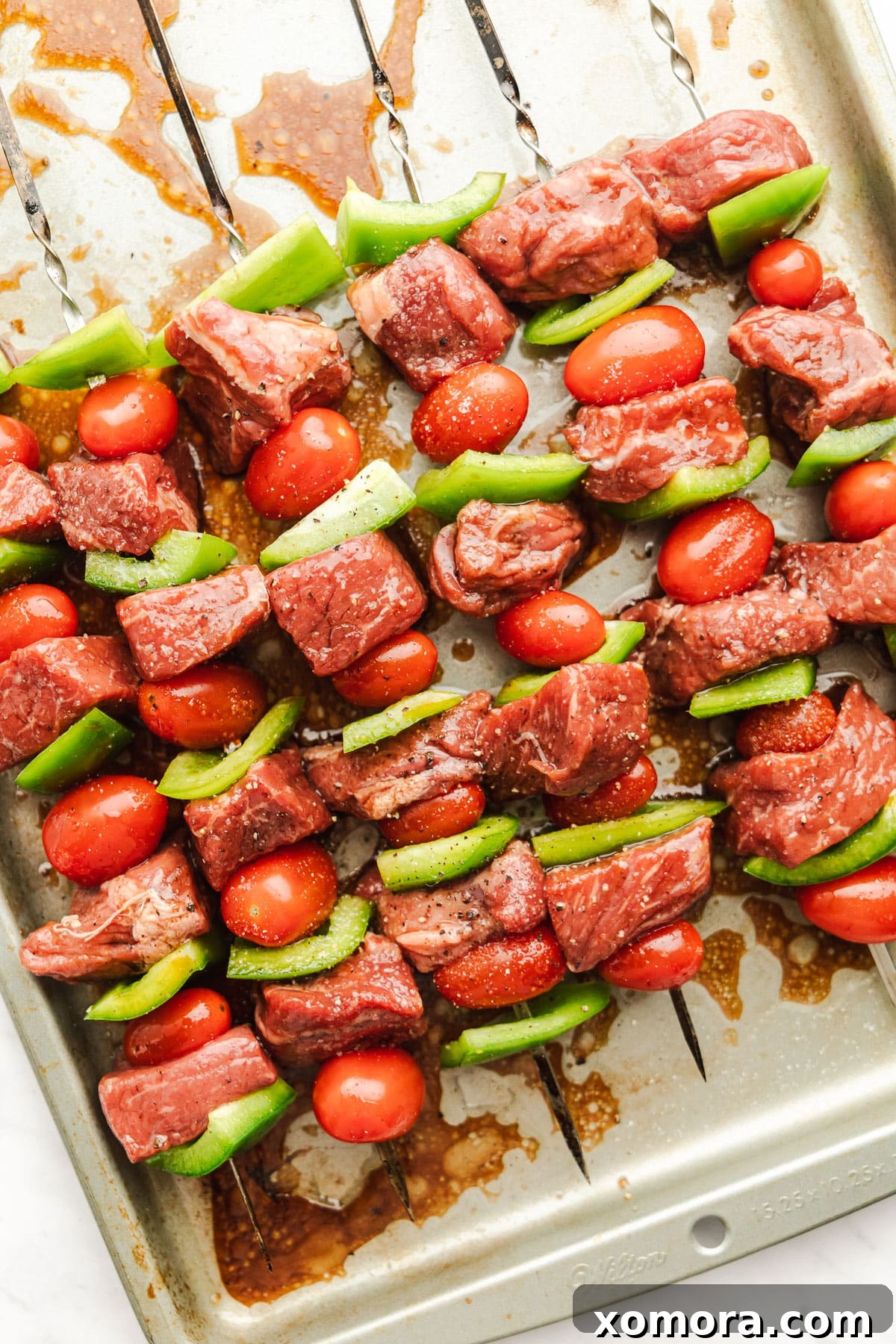
- Assemble the Kabobs: Begin threading the marinated steak pieces, bell pepper chunks, and grape or cherry tomatoes onto your skewers. Alternate the ingredients for an appealing visual and balanced flavor in each bite. Aim for a snug but not overly crowded skewer to allow for even cooking.
- Season and Prep for Grill: Arrange the assembled kabobs on a baking sheet. Drizzle any leftover marinade from the bag over the kabobs; the olive oil in the marinade will help the vegetables achieve a beautiful char and extra flavor. Sprinkle the kabobs generously with a pinch of salt and freshly ground black pepper.
- Grill to Perfection: Preheat your grill to medium-high heat. Once hot, carefully place the kabobs on the grill grates, ensuring they are not touching each other, to allow for proper air circulation and even cooking. Grill for approximately 3-5 minutes per side. The exact cooking time will vary depending on your preferred level of doneness and the thickness of your steak pieces. For optimal flavor and texture, let the kabobs rest for a few minutes after grilling before serving.
- Whip Up the Pesto: While the kabobs are grilling or resting, combine all the Pistachio Lemon Pesto ingredients (fresh basil, pistachios, lemon juice, garlic, salt, and extra virgin olive oil) in a blender or food processor. Blend until you achieve a smooth, vibrant green sauce.
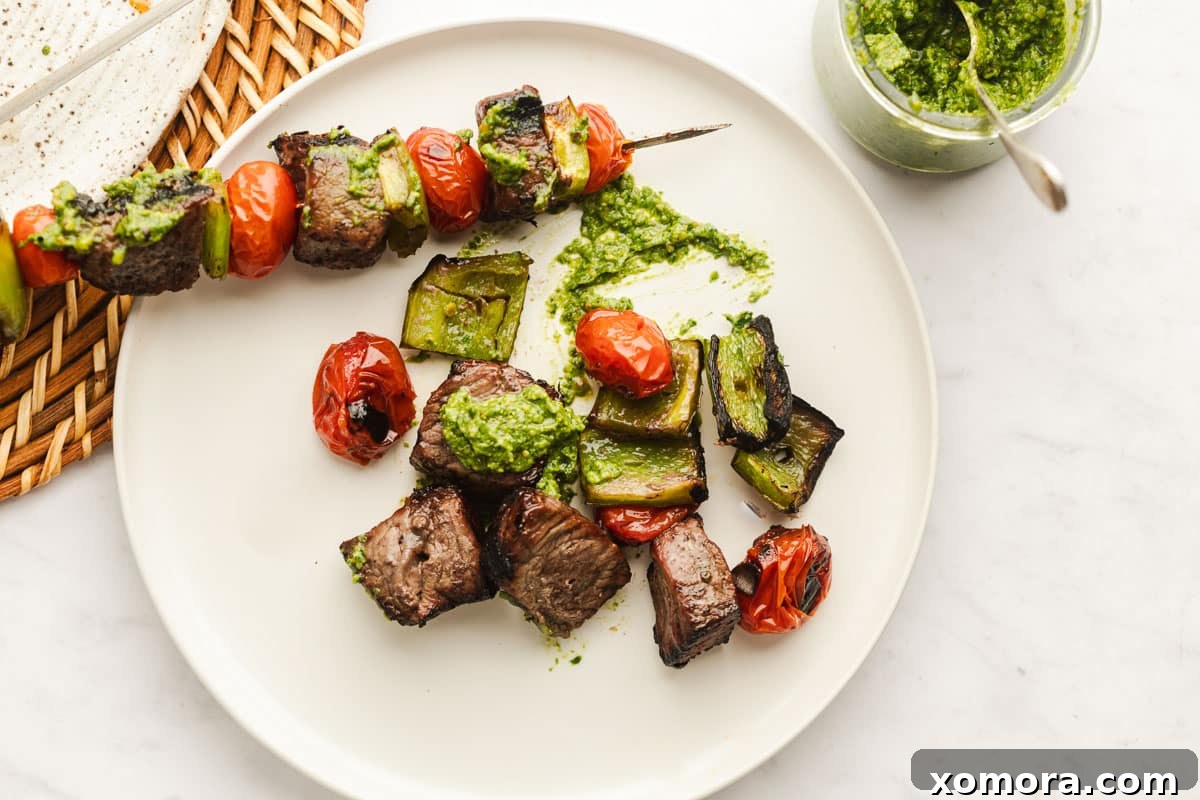
- Serve and Garnish: Once the kabobs are ready, generously brush the freshly made pesto sauce over the grilled steak and vegetables. Serve immediately. For an extra kick, you can sprinkle with crushed red pepper flakes, or dress them up with a crumble of cotija cheese or fresh strips of basil for added freshness and visual appeal.
Choosing the Perfect Steak for Your Kabobs
The cut of steak you choose can significantly impact the success and enjoyment of your kabobs. I wholeheartedly recommend **top sirloin** for its ideal characteristics. It’s a fantastic choice because it’s fairly lean, yet boasts good marbling, which contributes to its incredible tenderness and rich flavor. This cut provides a higher quality eating experience without the premium price tag often associated with other tender cuts of meat, offering exceptional value.
Exploring Other Steak Cuts for Kabobs
While top sirloin is our champion, several other cuts can also be used for kabobs, each with its own set of considerations:
- Ribeye: You can certainly use ribeye for kabobs, and its generous marbling will yield a very tender and flavorful result. However, ribeye is significantly more expensive, and for the smaller pieces used in kabobs, I don’t believe the added cost truly justifies the expense over a more economical choice like sirloin.
- Filet Mignon: It’s hard to beat the melt-in-your-mouth tenderness of a filet! While I adore filets, their high cost makes them a less practical recommendation for kabobs, where the meat is cut into smaller pieces and combined with other ingredients.
- Petite Sirloin: I generally advise against using petite sirloin for kabobs. These cuts are typically thinner, making them highly susceptible to overcooking and drying out quickly on the grill, especially when cut into small kabob-sized pieces.
- Sirloin Roast: Despite the similar name, sirloin roast is not the same as top sirloin. It comes from a different, tougher part of the sirloin primal. Due to its inherent toughness, it’s not the best choice for tender kabobs and would likely require extensive tenderizing or slow cooking methods.
- New York Strip: This is a very good option for kabobs. It offers a nice balance of meat and a moderate amount of fat, which contributes to flavor and keeps the steak juicy on the grill without being overly greasy.
- Flank Steak: Flank steak can be used for kabobs, but it requires careful attention. It’s a lean cut that can become tough very quickly if overcooked. If you choose flank steak, marinate it well and cook it rapidly to your desired doneness, ideally no more than medium-rare to medium.
- Skirt Steak: Skirt steak has more marbling and fat than flank steak, making it another good option for kabobs. Its loose structure readily absorbs marinades, leading to flavorful and relatively tender results when cooked correctly.
Achieving Your Preferred Steak Doneness
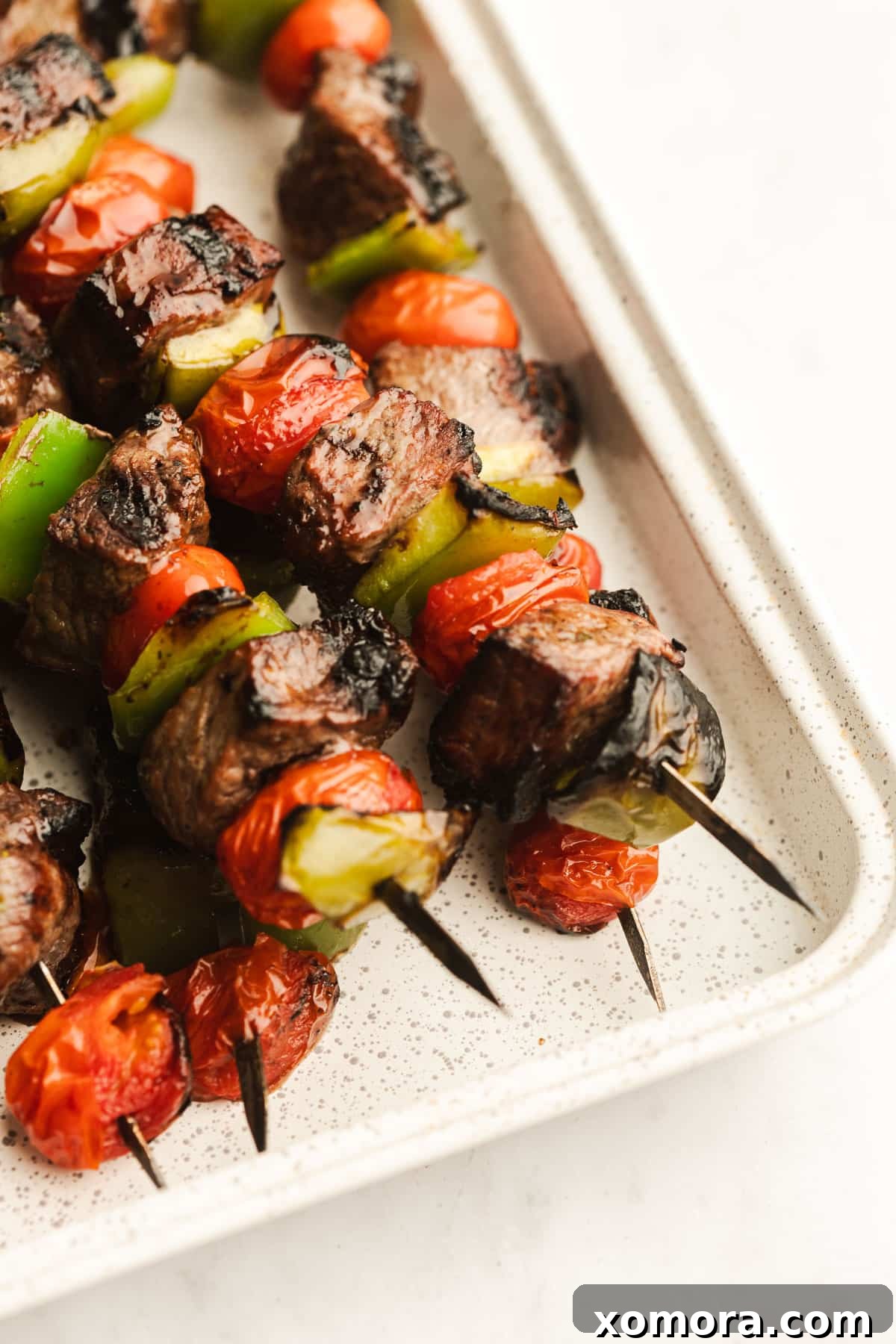
When it comes to steak doneness, personal preference reigns supreme. There’s no right or wrong way to enjoy your steak, and I believe everyone should savor their food exactly as they like it. While many chefs often recommend medium-rare for optimal flavor and texture, the most important thing is to prepare your steak to your personal taste. You can make an educated guess about doneness by observing the exterior of the steak, but this can be influenced by many variables such as grill temperature, direct flame contact, and the thickness of the steak cut. The only truly accurate way to determine internal doneness is by using an instant-read meat thermometer.
Remember that steak continues to cook for a few minutes after it’s removed from the heat, a process known as carryover cooking. To account for this, take your kabobs off the grill when they reach about 5 degrees Fahrenheit below your target temperature. Here’s a quick guide to internal temperatures for different levels of doneness:
- Rare: 120-125°F (49-52°C) – Cool red center
- Medium Rare: 130-135°F (54-57°C) – Warm red center
- Medium: 140-145°F (60-63°C) – Warm pink center
- Medium Well: 150-155°F (66-68°C) – Slightly pink center
- Well Done: 160°F+ (71°C+) – Little to no pink
Alternative Cooking Methods: Oven and Stovetop
While kabobs truly shine on the grill, offering that delightful tender texture and irresistible charred flavor, grilling isn’t always an option. Fortunately, you can still enjoy these delicious kabobs by baking them in the oven or cooking them on the stovetop.
Cooking Kabobs in the Oven:
Preheat your oven to 425°F (220°C). Line a baking sheet with aluminum foil or parchment paper for easy cleanup. For extra insurance against sticking, spread a thin layer of oil or use cooking spray on the lining. Arrange the kabobs in a single layer on the prepared baking sheet, ensuring they have a little space between them. Bake in the preheated oven for 9-14 minutes, or until the steak reaches your desired level of doneness. Turn them halfway through cooking to ensure even browning.
Cooking Kabobs on the Stovetop:
Place a grill pan or cast iron skillet on your stovetop and heat it to medium-high heat. If your pan tends to stick, add a small amount of oil before placing the kabobs. Arrange the kabobs in a single layer in the hot pan, making sure not to overcrowd it; cook in batches if necessary. Cook for 3-5 minutes on the first side until a nice sear develops. Carefully flip the kabobs and cook on the second side for another 3-5 minutes, or until the steak is cooked to your preference. Use a meat thermometer to check for accurate doneness.
Choosing the Right Skewers: Metal vs. Wood
The type of skewers you use can impact your grilling experience. Both metal and wood skewers have their advantages:
Metal Skewers: I personally prefer using metal or stainless steel skewers for my kabobs. They are durable, reusable, and won’t blacken or burn on the grill, even at high temperatures. You can easily spray them with oil to prevent food from sticking, and there’s no risk of splinters ending up in your meal. My metal skewers have served me well for many years, proving to be a worthwhile investment.
Wood Skewers (Bamboo Skewers): Wooden skewers are a convenient, disposable option. However, they can burn, splinter, and break if not properly prepared. If you choose to use wooden skewers, it’s crucial to soak them in water for at least 30 minutes (or even longer) before threading your ingredients. This prevents them from igniting or charring excessively on the grill, helping them withstand the heat better.
Storing Leftovers and Serving Suggestions
How to Store Leftovers:
Let’s be honest, these kabobs are so delicious, you might not have any leftovers! However, if you do find yourself with extra, they can be safely stored. Allow the cooked kabobs to cool completely before transferring them to an airtight container. Keep them refrigerated for 3 to 4 days. When reheating, gently warm them in the oven or on the stovetop to prevent the steak from drying out.
How to Serve Steak Kabobs:
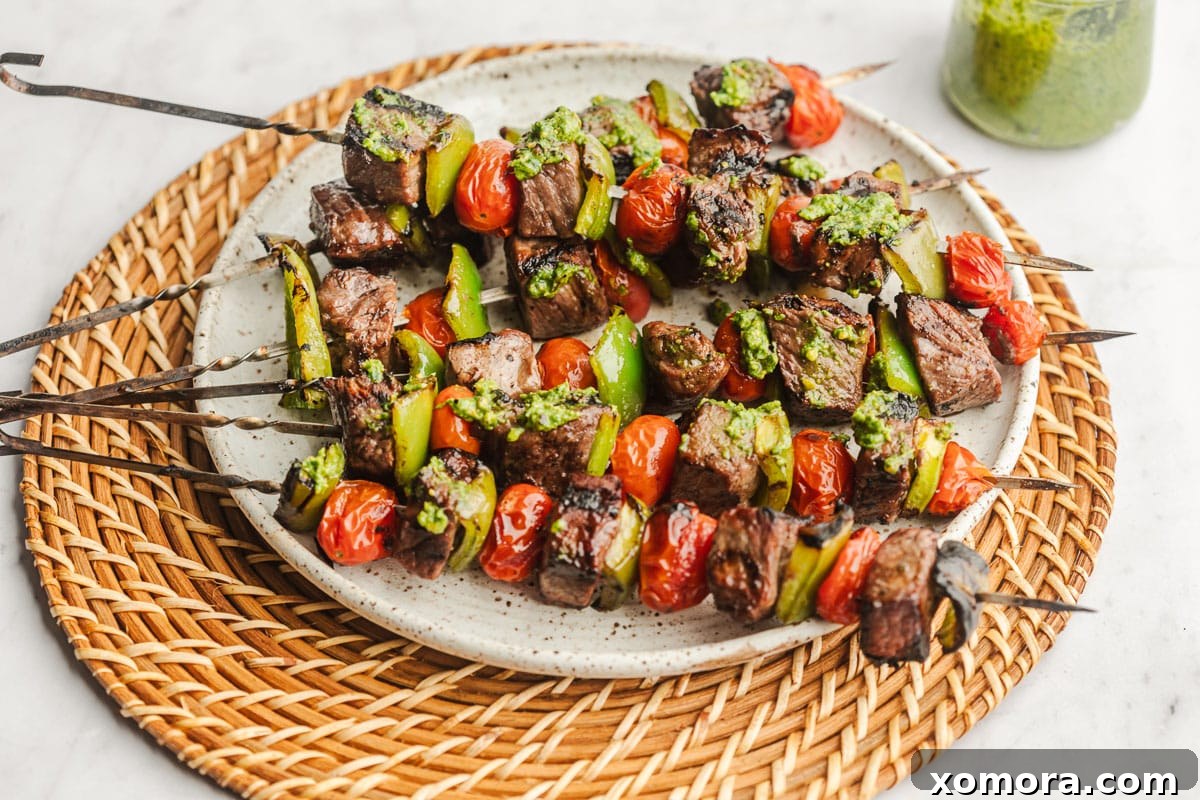
These pesto steak kabobs are a complete meal on their own, but they also pair beautifully with a variety of side dishes. For a classic and comforting combination, serve them alongside a fluffy baked potato and a crisp side salad. If you’re looking to prepare another fantastic side, I highly recommend my Garlic Green Beans, which complement the rich flavors of the kabobs perfectly. Bon appétit!
Discover More Delicious Recipes Like This:
- Balsamic Peach Chicken Kabobs
- Hawaiian Steak Kabobs
- Garlic Balsamic Chicken Kabobs
- Lemon Herb Grilled Chicken
- Ultimate Marinated Grilled Chicken
Pesto Steak Kabobs with Blistered Tomatoes & Peppers
Summary
These Pesto Steak Kabobs with Blistered Tomatoes & Peppers are incredibly juicy and cook quickly on the grill. Drizzle with homemade dairy-free pesto for a dinner your family will crave again and again!
Prep Time: 15 mins
Cook Time: 10 mins
Total Time: 25 mins
Servings: 6
Ingredients
Kabobs
- 1½ – 2 pounds top sirloin steak
- 3 green bell peppers
- 1 pint grape or cherry tomatoes
- Salt & pepper to taste
Marinade
- ¼ cup coconut aminos (or soy sauce)
- ¼ cup olive oil
Pistachio Lemon Pesto
- 3 cups packed fresh basil leaves
- ¼ cup shelled pistachios
- 3 tablespoons lemon juice
- 1 clove garlic (or ½ tsp minced garlic)
- ½ teaspoon salt
- ⅓ cup extra virgin olive oil
Instructions
- Cut your steak into large, uniform pieces (around 1¼ – 1½ inches) to ensure even cooking.
- Add the steak and marinade ingredients (coconut aminos/soy sauce and olive oil) to a gallon-sized resealable bag. Squeeze out excess air, seal, and massage the marinade around the steak. Let marinate for at least 30 minutes, flipping occasionally.
- Cut the top off your green bell pepper, remove the core and seeds, and slice the pepper into evenly sized chunks.
- Thread the marinated steak, bell pepper, and tomatoes onto skewers, alternating ingredients.
- Place the assembled kabobs on a baking sheet. Drizzle any excess marinade from the bag over the kabobs to coat the veggies. Season with a pinch of salt and pepper.
- Preheat your grill to medium-high heat. Place the kabobs on the hot grill, ensuring they are not touching. Grill for 3-5 minutes per side, or until your desired doneness is reached.
- Let the kabobs rest for a few minutes after grilling.
- In a blender or food processor, combine all pesto ingredients (fresh basil, pistachios, lemon juice, garlic, salt, and extra virgin olive oil) and blend until smooth. Brush the finished pesto sauce generously over the steak kabobs and serve warm.
Notes
This recipe has been updated to feature my dairy-free Pistachio Lemon Pesto. If you prefer the original pesto recipe, you can still use it by blending 2 cups fresh basil leaves, ½ cup parmesan cheese, ¼ cup pine nuts, ½ tsp lemon juice, and ⅓ cup extra virgin olive oil (adjust oil for desired consistency).
Nutrition information provided is for 1 kabob plus 1/6 of the pesto, assuming a total of 6 kabobs. Actual values may vary based on portion sizes and specific ingredients used.
Nutrition Information (Approximate)
- Serving: 1 kabob + 1/6 of pesto
- Calories: 398 kcal
- Carbohydrates: 9g
- Protein: 27g
- Fat: 27g
- Saturated Fat: 4g
- Cholesterol: 66mg
- Sodium: 489mg
- Potassium: 772mg
- Fiber: 2g
- Sugar: 3g
- Vitamin A: 1465 IU
- Vitamin C: 63mg
- Calcium: 65mg
- Iron: 2.9mg
Nutrition information is automatically calculated and should only be used as an approximation.